Waypoint journalists had written several articles about an Australian collective named Collective Shout. Collective Shout insists it’s “a grassroots campaigning movement against the objectification of women and sexualization of girls in media, advertising, and popular culture.” Its founder proclaims to be feminist, but its tactics mirror those of many evangelical censorship orgs.
Neither of the articles had what appear to be any errors or particularly controversial claims. Savage Ventures owners apparently just got concerned that the “controversial” nature of the pieces would hurt Google metrics and lose them money. So according to (now-ex) Waypoint writer Ana Valens, they pulled both articles offline without any real conversation with their authors:
VICE's owner Savage Ventures has requested the removal of my Collective Shout articles. This is due to concerns about the controversial subject matter—not journalistic complaintsEffective immediately, I will no longer contribute to Waypoint. I suggest letting VICE's owner know if this upsets you
This is not surprising behavior from the kind of VC opportunists that hoover up the corpses of once popular media brands, then parade those corpses around in an incoherent gambit to make a quick buck off of clickbait and shallow infotainment (see Sports Illustrated and countless other examples).
These kinds of folks don’t care about journalism, they care about metrics. And even then they’re not even particularly good at that; Vice has been less and less relevant since its 2024 final collapse, losing oceans of talent. Including these Waypoint authors, who justifiably quit once their articles were deleted. Defector suggests about 66% of the Waypoint team, including managing editor Dwayne Jenkins, have since quit.
The abrupt deletions of course adhere to absolutely no journalistic standards whatsoever. It’s the half-assed decision by a bunch of opportunists who are interested in clicks and attention, not journalism. And while this particular scandal impacted games journalism, it’s part of a broader trend toward the hollowing out of journalism, something being easily exploited by authoritarians and other bullshitters.
It’s more profitable to make a quick buck striking acquisition deals and pointless mergers for the tax breaks — generating badly automated clickbait and bullshit at historic scale — than it is to pay real reporters a living wage to create actual quality journalism and interesting content. The end result of that lazy and cheap mindset is everywhere you look. And it’s definitely getting worse.
One of the more frustrating aspects of any conversation we have around the preservation of video games, something that is simply not being done for the most part today for the vast majority of titles created, is how easy and simple the ultimate fix is. It isn’t a secret. It’s not an arduous process. It doesn’t require any hoop-jumping for publishers and developers. You just release the source code for games once they’re past their primary sales window and let the public preserve it, and even build on it, from there.
Doing so would accomplish a number of good things. First, it would both free the publishers from the burden of having to preserve this artform themselves while also unleashing an army within the public that are willing to do that work. The bargain that is copyright protection would be preserved, if not achieved with higher velocity, and then people like myself and the folks behind the Video Game History Foundation and Good Old Games (GOG) can finally stop our bitching about how our cultural output is disappearing. Secondly, if these developers and publishers were really smart, they would use the elongated interest timeline in these games that would result from all of this to sell other, tangible things surrounding these games, like figurines, merchandise, and other items. Not to mention driving interest in newer, updated titles within these same franchises.
So if this is all honey and roses, why have such source code releases been so sparse? Several reasons, likely. Some of it, believe it or not, is purely a combination of vanity and insecurity around the code itself. Lots of folks don’t actually want to throw open the factory doors and allow the entire world to inspect precisely how the sausage is made, so to speak. Criticism of code is as ubiquitous as the untidy writing of the code itself. And, of course, there are the big player developers and publishers out there that bow to the altar of intellectual property, instinctually gravitating towards protectionism out of fears they probably couldn’t even articulate if asked to.
Fortunately, we’re now finally starting to see some shifts in the thinking from some big players. First to discuss is Valve, which recently released the source code for Team Fortress 2, both for the client and server code. And while the license under which the code was released doesn’t allow for commercial projects, it does allow for anyone who wants to play with the code to publish what they create on Steam.
Valve’s updates to its classic games evoke Hemingway’s two kinds of going bankrupt: gradually, then suddenly. Nothing is heard, little is seen, and then, one day, Half-Life 2: Deathmatch, Day of Defeat, and other Source-engine-based games get a bevy of modern upgrades. Now, the entirety of Team Fortress 2 (TF2) client and server game code, a boon for modders and fixers, is also being released.
That source code allows for more ambitious projects than have been possible thus far, Valve wrote in a blog post. “Unlike the Steam Workshop or local content mods, this SDK gives mod makers the ability to change, extend, or rewrite TF2, making anything from small tweaks to complete conversions possible.” The SDK license restricts any resulting projects to “a non-commercial basis,” but they can be published on Steam’s store as their own entities.
The timing here is somewhere between slightly late and just about right, honestly. TF2 was released in 2007, nearly twenty years ago, and has had an active player-base for a long, long time. The game’s community had something of an uproar a couple years back, mostly around the prevalence of cheating going on in the game, but that seems to have died down somewhat. Opening the code up to the public might actually help with cheating issues in the game, as well. After all, you’ve now got an entire world’s worth of people who can alter or re-develop portions of the game and code to stave off cheating.
But the most important part of this is both that the game is now able to be preserved by a public that has full access to its underlying code and that interest in the game can be extended by that same public being able to build off the code and create new, interesting content. Valve, meanwhile, gets to have that content listed on its platform, while also retaining interest in the Half-Life series that is at the heart of all of this.
Last November, the Anti-Defamation League (ADL) released Steam-Powered Hate, accusing Valve’s game launcher, Steam, of fostering extremism. The report dropped just before Senator Mark Warner, a SAFE TECH Act proponent, threatened Steam’s owner, raising concerns about the political motivations behind the ADL’s claims.
The ADL analyzed over one billion data points, flagging just 0.5% as “hateful.” Yet, they misrepresent Steam—primarily a game marketplace—as a social media hub overrun with extremism, despite offering no real expertise in online content moderation or gaming culture. Meanwhile, they give powerful figures like Elon Musk a pass while pushing for government intervention in digital spaces they don’t understand.
This isn’t new—the ADL has a history of advocating speech restrictions, from social media to video games. As an American Jew, I find their big-government approach to content moderation alarming. Regulators must reject pressure from advocacy groups that misrepresent online communities and threaten free expression in the name of fighting extremism.
The ADL Misunderstands Gaming’s Complex and Notoriously Edgy Environment
Gaming communities operate on a different wavelength than typical online spaces. Gamers are notorious for their dark humor, edgier memes, and a communication style that can seem alien to outsiders. The ADL, in its attempt to analyze a platform central to gaming culture, failed to grasp this, making sweeping generalizations about a community it clearly doesn’t understand.
Take their report’s biggest claim: the vast majority of so-called “hateful content” was Pepe the Frog—a meme that, while hijacked by extremists in recent years, remains widely used in mainstream gaming culture. Even the meme’s creator was outraged by its association with hate groups. Yet the ADL doesn’t distinguish between an actual extremist Pepe and a harmless, widely used gaming meme. Instead, they lump them together, inflating their numbers.
Their AI system, “HateVision,” identified nearly one million extremist symbols—over half of which were Pepe. The AI was trained on a limited dataset of images and keywords the ADL pre-selected as hateful, but it failed to differentiate between legitimate extremism and gaming’s irreverent meme culture. Worse, it didn’t distinguish between U.S.-based and international users, ignoring the fact that gaming communities operate under different cultural norms worldwide.
The AI’s failures didn’t stop at images. It also couldn’t tell the difference between actual hate speech and the tongue-in-cheek, often provocative style of gaming communities. While gaming culture can be abrasive, the vast majority of players understand the difference between in-game trash talk and real-world hostility. The ADL? Not so much.
The ADL also went after copypastas—blocks of text copied and pasted to provoke reactions—identifying 1.83 million “potentially harmful” ones without bothering to check context. Their keyword-based approach flagged terms like “boogaloo” and “amerikaner” without acknowledging their multiple meanings. “Boogaloo” is mostly a Gen-Z meme, not a secret alt-right code word in gaming. “Boogalo” does have alt-right connotations, but there are other connotations like the one listed above. “Amerikaner” can refer to a cookie, the German word for “American,” or even a famous YouTuber’s username. They also flagged “Goyim” as a slur, despite it being a common and sometimes affectionate term used by Jewish people themselves. In the in-group of Jewish people it is often non-offensive. Though the term can be used in an offensive manner by antisemitic people, the ADL made no distinctions.
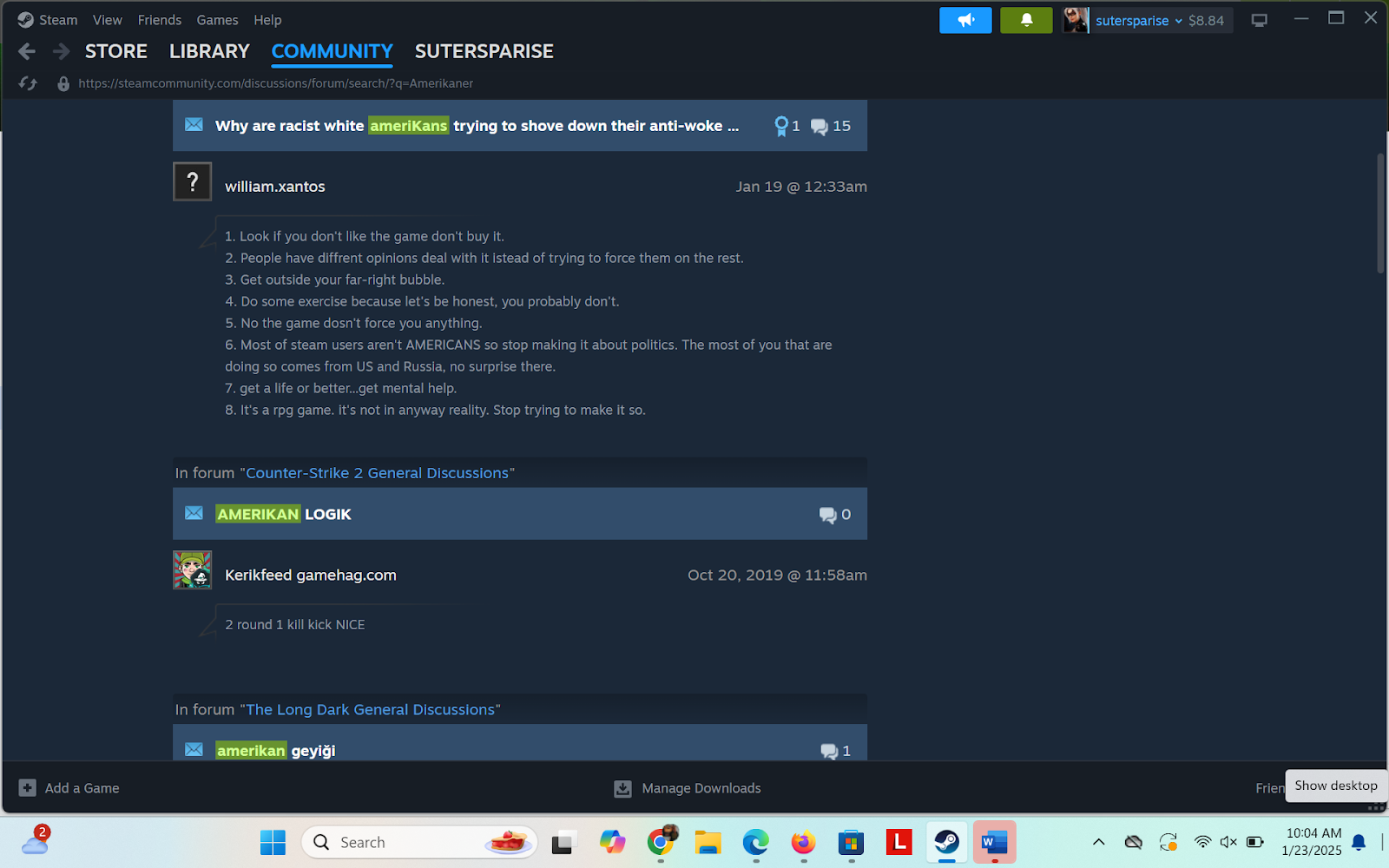
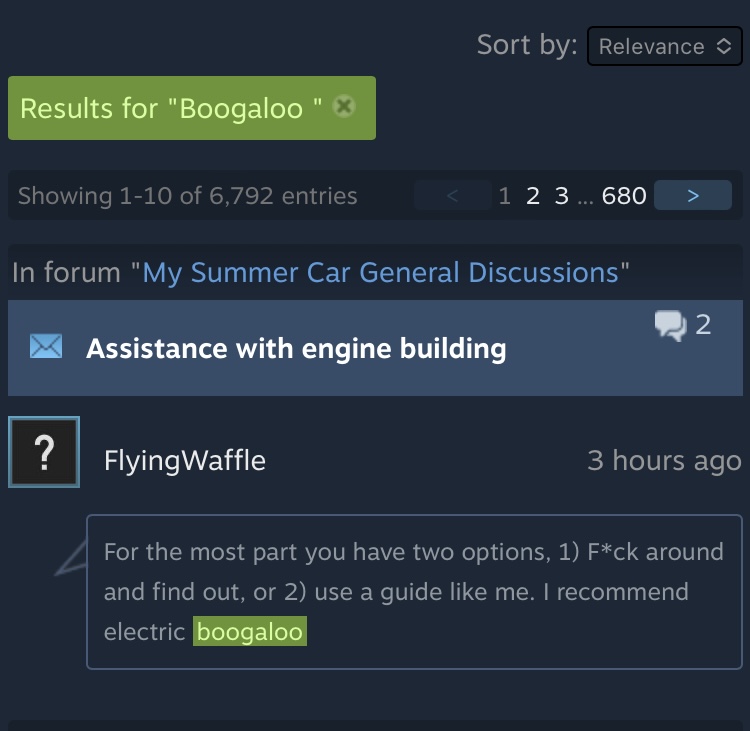
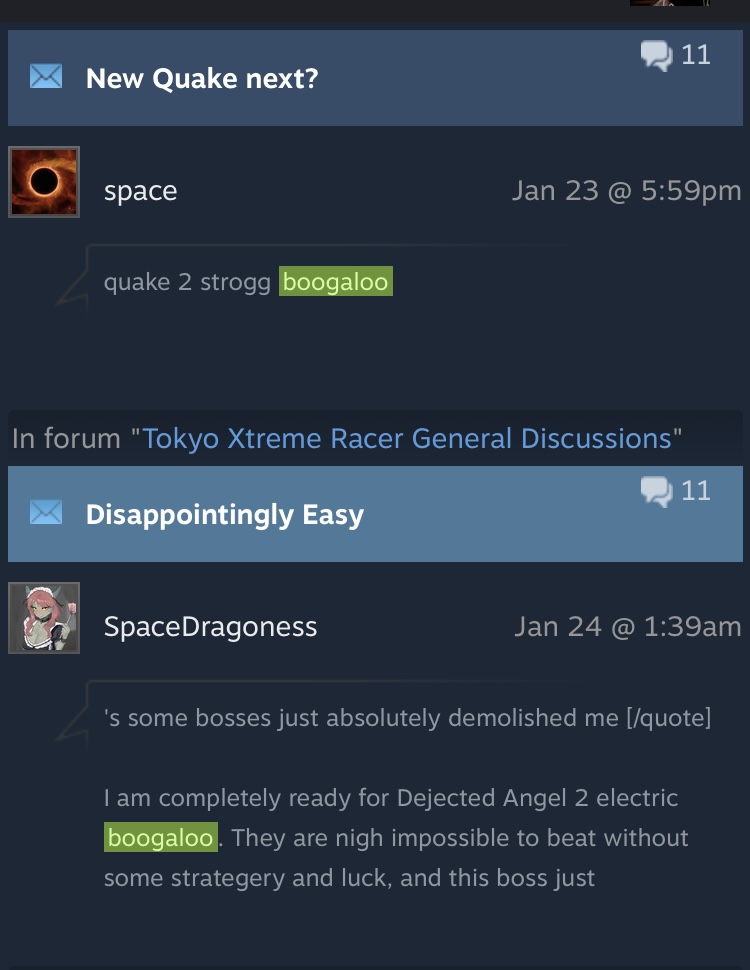
Curious, I did a Steam keyword search for “Amerikaner.” The first result was a left-winger calling out racism. The second was someone mocking Americans in Counter-Strike. The third was a non-English post. None of the results, in my opinion, rose to the level of extremism. I also searched “Boogaloo” and found references to the classic “electric boogaloo” meme, a non-English speaker using the term, and a gaming forum name. The ADL didn’t bother with this level of nuance—they just scraped forums, pulled words out of context, and called it a day.
The ADL also attacked Garry’s Mod (G-Mod), a sandbox game known for its anything-goes creativity. They focused on one mod featuring maps of real-life mass shootings, citing comments with words like “based,” “Sigma,” and even “Subscribe to PewDiePie” as signs of extremism. But these are common ‘chronically online’ phrases with broad uses. “Based” is Gen-Z slang used by individuals on both the left and right. “Sigma” is a meme mocking “alpha male” tropes. And while the Christchurch shooter did mention PewDiePie, claiming the ADL is unfairly targeting him isn’t exactly a stretch. Yes, PewDiePie has had controversies, but painting him as a hate symbol is a major leap.
The report wraps up with the tragic white supremacist attack in Turkey, where the ADL notes that while there were red flags on the shooter’s Steam profile, there’s “no evidence” he was directly inspired by extremist content on the platform. Still, they use this tragedy to argue Steam isn’t doing enough to moderate content. But even their own research found Steam actively filters Swastikas into hearts—identifying only 11 profiles where this workaround failed. Eleven profiles. Out of millions. That’s an edge case, not a crisis.
To be fair, the study did identify a small number of fringe groups glorifying hate and violence. But the bigger question is whether the ADL’s findings actually reflect a serious problem—or if they’re simply misunderstanding an edgy, chaotic, but largely non-extremist gaming culture. And given what a small amount of extreme content that the ADL found worldwide, it looks like Steam is actually doing its job.
The ADL’s Steam Comparison is Hypocritical and Misguided
Still, the ADL reportedly takes issue with Steam’s so-called “ad hoc” approach to content moderation, claiming that despite Valve’s removal efforts, the platform still “fails to systematically address the issue of extremism and hate.” But this critique ignores the reality of gaming culture and Steam’s own policies.
Steam’s moderation reflects the nature of its community. Its content rules fall into two categories: one for games—allowing all titles except those that are illegal or blatant trolling—and another for user-generated content, which bans unlawful activity, harassment, IP violations, and commercial exploitation. The ADL criticizes Steam for not taking a stricter stance like Microsoft and Roblox, but that comparison is misleading at best.
Microsoft’s gaming history isn’t exactly a beacon of virtue. Xbox 360 live chats were infamous for racist slurs, and Call of Duty’s lobbies remain a toxic free-for-all. Meanwhile, Minecraft—the game the ADL seems to hold in high regard—was created by someone with a history of antisemitic remarks, and Microsoft itself has faced accusations of workplace discrimination. Yet, the ADL doesn’t seem nearly as concerned about these issues.
As for Roblox, while it does enforce stricter content moderation, it’s far from an extremist-free utopia. The Australian Federal Police have warned about the platform’s potential for radicalization, and NBC has reported extremist content explicitly targeting children. If anything, this suggests that heavy-handed moderation doesn’t necessarily eliminate bad actors—it just pushes them to adapt.
Steam’s approach may not align with the ADL’s ideal vision of content moderation, but pretending that Microsoft and Roblox represent the gold standard ignores their own deep-seated issues. It does not make sense for a platform like Steam to have policies identical or similar to XBox and Roblox. Both of those are fully live-service platforms, whereas Steam is primarily a consumption platform for games as opposed to a platform where users are constantly interacting with one another in-game, online through the platform.This creates market differentiation. Platform’s policies are a reflection of the services that they offer and if users feel the policies are problematic they can jump ship to another provider.
Regulators Must Beware of Overreach from Non-Trust & Safety Experts Like the ADL
In its report, the ADL calls for a national gaming safety task force, urging policymakers to create a federally backed group to “combat this pervasive issue” through a multi-stakeholder approach. On paper, this sounds like a noble goal. In practice, it’s a recipe for government overreach that could stifle the gaming industry’s creative and independent spirit.
Gaming has thrived because of its grassroots nature—built by passionate developers and players, not by bureaucrats or advocacy groups with no real understanding of gaming culture, online community norms, or trust and safety. A federal task force risks imposing rigid, top-down regulations that don’t fit the dynamic and ever-evolving gaming world. Worse, it could open the door to politically motivated interventions that prioritize appearances over real solutions.
The ADL also suggests Steam engage in multi-stakeholder moderation efforts. But who controls the conversation? When powerful corporations and activist organizations dominate these discussions, smaller developers and gaming communities get sidelined. That’s how you end up with policies shaped by corporate interests and advocacy agendas rather than solutions that actually work for gamers. And let’s be blunt—the ADL has no business dictating content moderation policies for gaming platforms.
The ADL is not an expert on content moderation, online community dynamics, or trust and safety. It has no meaningful experience navigating the complexities of digital spaces, algorithmic content regulation, or the unique cultural norms that define gaming communities. Instead, their report relies on anecdotal evidence, an oversimplified AI model, and out-of-context symbols, all of which lead to flawed conclusions and misleading claims.
Steam isn’t Microsoft or Disney. It’s a privately owned company run by Valve and Gabe Newell, without the vast political and financial clout of industry giants. Forcing broad content moderation mandates onto platforms like Steam sets a dangerous precedent, burdening smaller businesses that lack the infrastructure of the major tech companies. And let’s be clear: Steam’s primary function is to sell video games, not to serve as a social media watchdog.
The ADL’s concerns about extremism may be well-intended, but their lack of expertise, misinterpretation of gaming culture, and one-size-fits-all approach make them uniquely unqualified to weigh in on this issue. Their push for federal intervention aligns with the broader SAFE TECH Act’s concerning political and financial motivations, which could disproportionately harm platforms that aren’t backed by corporate lobbying power.
Yes, online extremism is a problem—but handing control to out-of-touch regulators and advocacy groups that don’t understand the space isn’t the answer. The gaming industry must stay free, innovative, and independent—not bogged down by heavy-handed government oversight that threatens to erase the very culture that makes online gaming communities thrive.
Elizabeth Grossman is a first-year law student at the University of Akron School of Law in the Intellectual Property program and with a goal of working in tech policy.
Valve’s Steam PC gaming storefront appears to be on a bit of a pro-consumer kick as of late and I like it. We recently discussed the platform’s update to its purchase process, which now specifically includes explicit language around how the purchase is that of a revokable license to play the game, rather than any misleading or buried language that would lead a consumer to think they were actually buying the game outright. This doesn’t solve the problem of non-ownership of digital goods itself, of course, but it at least is a step in the direction of better informing the customer as to what they are getting in exchange for their dollars.
And now Steam appears to be tackling consumer protections surrounding the pre-ordering of DLC or “season pass” purchase tiers. The topline summary is the requirement of a release timeline and the potential for unilateral refunds if promises and timelines aren’t kept are being added to anyone looking to offer DLC for pre-order and/or putting a game up on a season pass offering.
Steam will now require more transparency around season pass and DLC content, including details about what’s included and expected release dates. Anything that ends up delayed could then potentially be eligible for a partial refund. “By offering a Season Pass, you are promising future content,” the new guidelines to development partners read. “In the process of launching a Season Pass you will be asked to commit to a launch timing for each content release in the Season Pass. That launch timing is a commitment to both customers and Steam.”
Steam adds that while game development is complex and challenging, with delays sometimes necessary and understandable, companies will only get to reschedule DLC and season pass release timing once. “If you aren’t ready to clearly communicate about the content included in each DLC AND when each DLC will be ready for launch, you shouldn’t offer a Season Pass on Steam,” the company writes.
There are some other requirements in there as well, but the above is where the real meat of this resides.
So, a couple of thoughts on this. First, it’s very difficult to argue against these changes if you look at it even for a moment from a consumer perspective. If I’m going to hand my money over to a game publisher for content to be published in the future (something I would never do, by the by), then I should at least be informed as to when to expect that content and be reimbursed if those promises aren’t kept. The fact that an additional provision in the policy change requires real money to be refunded in those instances, instead of in-game currency or other in-game givebacks, certainly helps as well. Digital product or not, this is fairly basic commerce standards we’re talking about here.
But I also rather like one specific manner in which Steam and Valve are framing this: “a commitment to both customers and Steam.” For far too long, the public has rightly felt that Valve’s storefront was far more friendly to game publishers than its own customers. Statements like this seem to indicate that Steam is looking to shift the pendulum on that, aligning more with the customer compared with the publisher.
Hopefully this trend will continue and Steam, and other storefronts too, will demonstrate that they value the patronage of their customers, rather than behaving as though that patronage is simply owed to them.
We’ve been writing stories about how, when it comes to digital purchases, we typically do not own what we’ve bought. Instead of buying a product, such as the digital version of a video game, what we are instead buying is a non-transferable license to use that product. While readers here will be largely familiar with this annoying concept, most online retailers bury the language for this so deep inside their labyrinthian EULAs that the overwhelming majority of the public is none the wiser. Steam has traditionally been no different, which is how you get confused fans complaining about how a game they bought has been changed via an update, or how your Steam library just disappears when you shove off this mortal coil.
But thanks to a California law that goes into effect next year, this has already changed. Ahead of that law, Steam has updated the messaging users see when purchasing a game to put the lack of game-ownership right in their faces.
Now Valve, seemingly working to comply with a new California law targeting “false advertising” of “digital goods,” has added language to its checkout page to confirm that thinking. “A purchase of a digital product grants a license for the product on Steam,” the Steam cart now tells its customers, with a link to the Steam Subscriber Agreement further below.
California’s AB2426 law, signed by Gov. Gavin Newsom Sept. 26, excludes subscription-only services, free games, and digital goods that offer “permanent offline download to an external storage source to be used without a connection to the internet.” Otherwise, sellers of digital goods cannot use the terms “buy, purchase,” or related terms that would “confer an unrestricted ownership interest in the digital good.” And they must explain, conspicuously, in plain language, that “the digital good is a license” and link to terms and conditions.
Frankly, the idea that this had to be mandated by state law is silly. That law didn’t suddenly educate Valve and other online marketplaces for digital goods that there was a problem here. Surely Valve has fielded questions and/or complaints from consumers in the past who had thought they’d bought a game only to find out they hadn’t. These companies could have proactively decided that informing their customers of the reality in a way that doesn’t take a set of bifocals and a law degree to parse through a EULA or ToS was a good idea. They just didn’t want to, for reasons that I’m sure you can decipher for yourself.
But now consumers will be better informed. And what will be interesting will be to see if this changes anything when it comes to the macro-behavior of customers.
In other words, if there isn’t some precipitous drop in purchases now that this new language is in place, the open and remaining question will be why Valve and companies like it weren’t more upfront about this reality all along?
When tragedy strikes, it’s human nature to search for answers. But when you’re Fox News, it seems that the answer is always the same: blame video games, social media, or anything else that fits your preconceived notions, facts be damned.
In the aftermath of the assassination attempt on Donald Trump, I idly wondered how long it would take before someone tried to blame the shooting on social media, smartphones, or video games.
It took just slightly longer than I expected. On Thursday, ever reliable Fox News blasted this headline:
Trump shooter used gaming site that features presidential assassination game
And then they also mention, for good measure, that he “also had a Discord account.”
Incredibly, it took two whole reporters to come up with this story.
And let’s be clear, almost the entire story is false, and the parts that aren’t false are stupid. This is some of the worst reporting I’ve seen in a while.
The “gaming site” in question was Steam. Anyone should know it has a ton of games. Listing the “Presidential assassination game” in the headline is basically an admission of just how dishonest Fox News is because five paragraphs into the article, they mention:
“there is no evidence Crooks ever played it.”
So what’s it doing in the fucking headline, Fox?
Also, it’s even worse than that because other reporters who actually understand what “reporting” means did the research and found out that the reported Steam account that some people claimed belonged to Crooks was fake. CBS reporters had that story:
A new analysis shows an online account that was believed to belong to the shooter in the assassination attempt on former President Donald Trump — and where he had purportedly called the date of the attack his “premiere” — was fake, a federal law enforcement official told CBS News on Thursday.
A law enforcement official and an additional source familiar with a briefing given to U.S. lawmakers on Wednesday previously told CBS News that the gunman, Thomas Matthew Crooks, had an account on an online gaming platform on which he posted: “July 13 will be my premiere.” But the federal law enforcement official says further investigation determined it was a fake account.
I saw some other reporting suggesting that the account on Steam was one where someone changed their username to pretend to be Crooks.
Watching the Fox News crowd get so desperate for anything to blame the shooting on is pretty pathetic. But I have no doubt that someone will bring this up in the future as if it were factual, and seeing the story morph to claim not just that he was on Steam, but that he played this supposed “Presidential assassin” game. Because facts no longer matter.
The capricious nature of Nintendo’s IP enforcement practices are, if you’re a regular reader here, quite legendary. In this case, however, it seems like Nintendo’s reputation is what played a part in some copyright fuckery, rather than the company engaging in said fuckery itself.
If you’re not familiar with Garry’s Mod, then you obviously weren’t much of a gamer in the mid-2000s. Built off of Valve’s Source engine, the “game” is essentially a sandbox game with all of the physics of the engine, but in an open “world” in which players can more or less do whatever they want. It also allows for all kinds of user-created mods and content to be added. And, because Nintendo was and remains quite popular with a sizable segment of the gaming population, some of that user generated content created over the past roughly two decades included content and characters from Nintendo games.
The past tense in that sentence being important here, given that it was only recently that Kotaku reported that Nintendo demanded and got all of that content yanked down from the game entirely.
In an update to Garry’s Mod’s Steam page, the developers stated, “Some of you may have noticed that certain Nintendo related workshop items have recently been taken down. This is not a mistake, the takedowns came from Nintendo.”
The update continues, “Honestly, this is fair enough. This is Nintendo’s content and what they allow and don’t allow is up to them. They don’t want you playing with that stuff in Garry’s Mod – that’s their decision, we have to respect that and take down as much as we can.”
So why would Nintendo do this now, after years and years of the content in question existing? It obviously cannot be that Nintendo is suffering some form of irreparable harm due to its own fans having fun creating Nintendo-y things within Garry’s Mod. Were that the case, surely all that harm would have come to Nintendo’s attention somewhere over the course of the last eighteen-plus years. But for all that time, Nintendo was silent.
And, it appears, Nintendo has remained silent. Truth be told, there existed a version of this post taking Nintendo to task for being a bunch of nonsensical copyright assbags. That post has since been rewritten into this one, however, after we noticed some interesting contributions from our awesome community on our BestNetTech Insider Discord channel.
Brewster T. Koopa was one of the modders who had content removed from Garry’s Mod. They were adamant from the jump that it was unlikely Nintendo was actually behind the takedowns, based mostly on the above timeline. Then came the answer, with a screenshot from another person explaining just what happened.
We’ve seen this sort of thing before. And, frankly, the story here is the same as it was in that previous case with Bungie. The reason these bad actors are able to pull this sort of crap is due to two things. First, and least important, is Nintendo and Bungie’s reputations for being absolutely draconian when it comes to copyright enforcement. That’s something fairly close to victim blaming in this instance, to be sure, but it’s hard to imagine someone being able to pull this off with a CD Projekt Red or a company with a reputation for being more lenient on copyright matters.
But the real culprit here is Valve’s DMCA review process. If some folks on the internet can figure out in fairly short order that these takedowns are coming from an email address and domain that are not actually owned by or associated with Nintendo, then someone on Valve’s end could have figured this out as well. Instead, the content just came down. And if we’re going to have a DMCA process that looks anything remotely like it does today, that’s a pretty damned big problem. Collateral damage when it comes to matters of speech are simply not acceptable.
So, Valve needs to do better. And, sure, it would be nice if Nintendo turned over a new leaf and was better on copyright matters generally, but the company in this case was also something of a victim here.
It was a couple of weeks back when we highlighted the story of how one game, Workers & Resources: Soviet Republic, was suffering as the victim of very clear DMCA abuse. If you don’t recall the post, you can get all the details in the link. The short version of it is: a fan of the game and member of the game’s community wrote a guide for making the game more realistic, the publisher liked it so much that they wanted to incorporate some of it into a new “realistic” game mode they were already creating, they offered to give him credit after the game mode was released, and then everything went sideways.
This community member, who the publisher claims is a lawyer, began DMCAing everything about the game, from the website for the game to the game listing on Steam. And… it all worked! The sites went down. The game got delisted from Steam. The studio’s YouTube videos for the game got taken down. All fraudulent, none of it legit. That was middle February.
We are pleased to announce that our game is now back in the store! We thank you for your patience, support and understanding as we navigated this tricky situation.
We want to apologize to those who were looking to purchase the game and were unable to. We realize that we underestimated the situation, and it quickly escalated to a point that posed a threat to our game. We greatly wish that this had not been the case.
But we are now back on track and you can fully enjoy the game! We are excited to get back fully to the development and put this matter behind us.
How many potential sales were lost due to this whole episode? It’s impossible to say. How much reputational damage was done due to it? Also impossible to say. But the answer to both of those questions is absolutely not zero, that much is sure.
And more to the point, this highlights that the system is freaking broken. For a game to be disappeared for 3 weeks as a result of one person’s ability to take advantage of the DMCA takedown process shows the flaw in the system. It’s way, way too open for this kind of abuse. The sites are too quick to comply with takedowns, clearly. The online stores likewise.
But that is how the system currently works, unfortunately. And nobody seems all that keen on fixing it. So instead you get a publisher apologizing to its customers for being the victim.
Over a year ago, we discussed an annoying and strange set of actions taken by Rockstar and Take2, the companies behind the popular Grand Theft Auto series of games. Two actions were taken in sequence by those companies that were clearly related. First was that they worked to get a fan-made GTA 4 mod taken down, after learning that the mod essentially brought the cities and some of the gameplay from previous GTA games into GTA 4. Shortly after that was done, Rockstar released GTA Trilogy, which was a re-release bundle of those same older games the mod was incorporating. The problem is that GTA Trilogy was such a broken mess that the company had to pull the games out of online stores almost immediately. The launcher for the game was broken, the games were buggy as hell, and so on.
So why are we talking about this again? Well, GTA Trilogy is getting released again, on Steam first. But if you thought the bugs had been worked out and all is well with the title… LOL, no. Instead, a buggy version is being released again as is, but this time on sale!
Today, after some leaks and rumors, Rockstar Games released Grand Theft Auto: The Trilogy – Definitive Edition on Steam. The good news: It’s on sale, meaning you can grab all three classic games for cheap. The bad news: It’s the same infamously messy remaster that hasn’t received a substantial update since nearly a year ago. As you might expect, folks ain’t too happy about the situation.
Rockstar ultimately had to apologize to the community because the remasters were so awful. Eventually, Rockstar and Grove Street Games did fix some of the problems players had cataloged online. But the last major update for the game was in February 2022. Since then, the remastered trilogy has remained in a fairly rough state. So it doesn’t seem like the best time to release it on a new platform and yet, here we are.
$30 for three games really should sound like a good deal. But the public fully knows how buggy these games are and it’s completely tone-deaf to release those buggy games with the only give-back being a discount on price. And if you want to speculate that Rockstar has some patch in the works to un-break the games, keep in mind that the trilogy has been off the market for over a year now. There was plenty of time to fix the title before re-releasing it. I also imagine that buyers would prefer to have a completely working game rather than a discount on a broken one.
While some hold out hope that Rockstar will still swoop in, patch these games up and fix all the visual bugs and other problems, that seems more unlikely after today. Instead, it seems this is as good as things are going to get. Not to mention that Rockstar has plans to release these games on the Epic Store later this month, too. It does seem as if the time to fix GTA III, Vice City, and San Andreas has run out and Rockstar is ready to move on. What a shame.
It’s not just a shame; I struggle to understand how this move makes any sense at all. Discount or no, the release of a buggy game is going to get Rockstar absolutely murdered in terms of customer responses to this whole situation. It’s making the mistake it made over a year ago all over again, but telling the public to be satisfied with a discount on the game.
As they say, when you’re in a hole, the first step is to stop digging.
Buckle in, because there are essentially two ways to write this post but both of them start off the same way. Regular readers here will be familiar with Nintendo’s now years-long war on emulation. The whole thing is ultimately quite stupid, because there is no indication that emulator and ROM sites ever really had a negative impact on Nintendo’s business. Despite that, first with the release of Nintendo retro-consoles and then back catalog games on modern platforms like the Switch, Nintendo went on a legal and DMCA spree trying to end Nintendo emulation on the internet so it could, in some cases, release its own far shittier product. The point here is that, no matter the context, Nintendo hates the idea of having its games emulated.
So imagine the company’s reaction to when Valve released a video showing off how useful its Steam Deck handheld console is, while including a cameo for a Nintendo Switch emulator!
You had to be pretty eagle-eyed to spot the reference in the less than three-minute YouTube clip, but Twitter gaming insider Nibel did, and pointed it out in a tweet that immediately blew up. The Yuzu thumbnail on the home screen is only visible for a split second, but it’s absolutely there, and presumably was downloaded by whoever at Valve assisted in making the YouTube video.
Before the end of the day, Valve removed the video and swapped it with a new one in which the Yuzu thumbnail has been replaced by art for Portal 2. But the damage was done: One of the biggest gaming companies in the world had officially broached the taboo subject of video game emulation. “Streisand effect is strong with this one,” wrote one commenter. “I will definitely be emulating Switch on the Steam Deck.”
And here’s where we could choose a path on what we believe or don’t believe about how this all went down. On the one hand, Valve was very quick to remove the video and replace it with one sans the emulator appearance. It’s also entirely reasonable to think that whoever had put the video together in the first place hadn’t really paid attention to the icons that were appearing on the Deck and didn’t think anything of releasing the video. And we’ve seen many, many times that even tech companies don’t understand the Streisand Effect, or attempt to elude it.
If the above is true, then Valve accidentally notified the world of a useful feature of the Steam Deck: the ability to run emulators. This also doesn’t really represent a major threat to Nintendo, as emulating the Switch on the Deck is not really a replacement for a Switch generally. At most, you’ll have some really dedicated pirates, but far more tinkerers and hobbyists, checking out how it all works. One big happy accident that doesn’t really harm Nintendo.
Or, if you’re the tin-foil hat type of folk, Valve did all of this on purpose and only pantomimed the scramble to replace the video to take advantage of the Streisand Effect. It’s not like there isn’t a market already for emulation on the Steam Deck, after all.
The Steam Deck, meanwhile, has become a hotspot for all types of other emulation besides the Switch, including the Game Boy Advance, GameCube, and PS2. If you’ve ever heard anyone espouse the virtues of Valve’s new Switch competitor, its capable emulation abilities have likely been listed among its main perks. Normally Valve doesn’t make that explicit, however. I can only imagine how quickly founder Gabe Newell started getting phone calls from Nintendo’s lawyers, though of course we don’t currently have any evidence the latter was involved in getting the video taken down.
Personally, I don’t believe this was done purposefully. As they say, it’s always better to assume incompetence as opposed to malicious intent. But at the end of the day, emulation on a Steam Deck simply doesn’t replace the console versions of Nintendo’s products. I do expect Nintendo to freak out about this… but it shouldn’t.