We here at BestNetTech have longed complained about the DMCA takedown process being wide open for all kinds of fraud and abuse. At one point years ago, Google reported that nearly 100% of the takedown requests it receives are not the sort of targeted takedowns the creators of the DMCA imagined, but rather more of a carpet-bomb approach. Examples of this sort of thing abound, with much of them comprised of companies not taking the process seriously and making all kinds of errors or accusations as a result of not doing their due diligence. The more rare, but more concerning version is when the DMCA takedown process is used fraudulently to exact revenge against an enemy. That this can even be done should highlight the problem with our current process of taking content down first and then asking questions later.
In the last couple of weeks, a video game was released on Steam. Titled No Players Online, it was a horror game and something of a sequel to a freeware game of the same name that was released in 2019. Many of the same folks behind the original, including Adam Pype, produced its successor under the developer name Beeswax Games. And then, shortly after its release on Steam, the game was hit with a DMCA takedown.
According to Beeswax, the game was hit by a Digital Millennium Copyright Act claim filed by a “former friend” who “claimed to be co-author of the game despite not having done anything for it”. Valve then took the game down on 13th November, a week after release. The developers filed a counter-notice, and Valve have now reinstated the Steam release after the complainant neglected to respond to that counter-notice in time.
You can read developer Adam Pype’s full account of events here. It doesn’t name the “former friend”, and I’m not going to speculate about their identity. Pype says the upheaval has cost the project dearly, writing that “we spent 2 and a half years of our lives and a ton of money making this game. we also have a lot of people who believed in us and wanted us to succeed. it’s crazy to me that someone can just take down our game by filling out a simple form, and it’s been tough trying to reconcile with this betrayal from someone i considered a dear friend.”
The takedown effected the ability to list and sell the game a week after release. That is essentially in the prime window for sales for any new game, but it’s a particularly important window for a small indie game that is looking to generate buzz and boost purchases. Beeswax Games missed out on a huge chunk of that, having to instead spend its time navigating the DMCA process to get Steam to relist the game.
And why is all of that how this works? Because the process Steam follows is to takedown the game upon accusation. This appears to be nothing more than a fraudulent takedown by some scorned third party. It worked because Steam took the game down without requiring any proof of the rights the third party asserted. Steam didn’t even ask any questions. It’s as simple as get notice, take game down.
Which makes an entity like Beeswax Games guilty until proven innocent. The onus of evidence is not on the party making the claim initially. It’s on the target of that claim. There is very little else in American law that works anything like this and it’s incredibly frustrating to watch this in action.
Pype continues that “this situation has had a significant impact on us, especially given how crucial the first months after release are for small indies like us. we lost out on much needed momentum and revenue right after the release of our game and we’re unsure if we will be able to recover financially from this given our already thin margins.”
This is a problem worth fixing. Businesses like Beeswax should not face the threat of going under simply because the DMCA allows for this kind of abuse.
The rush to blame video games for all the world’s ills is, of course, nothing new. While some of the more novel examples of this blame-game include current Speaker of the House Mike Johnson’s claim that video games are the reason the Medicaid is abused (yes, seriously), this nonsense is more commonly trotted out whenever violence is committed, typically for mass shootings. It’s irresponsible and not based on anything remotely resembling scientific data and it should stop.
In the wake of Charlie Kirk’s horrific murder, we got to see this once again in action. The shooter’s video game platform accounts and gaming habits were scrutinized, as was his communications on Discord. And then came bumblefuck RFK Jr. with the typical level of stupidity.
The suspected shooter and his apparent connections to gaming and internet culture raised questions about whether the White House or Congress might respond with greater scrutiny of those communities. Health and Human Services Secretary Robert F. Kennedy recently suggested that the government should investigate connections between first-person shooters and mass shootings.
The Kirk shooting wasn’t a mass shooting. There is no concrete research to suggest that one of the most popular genres in gaming somehow leads people to shoot many people at once. The suspect doesn’t appear to have been deeply steeped in first-person shooters anyway. Kennedy’s comments, in other words, are essentially a non-sequitur. Par for the course.
But Republican Kentucky Rep. Brett Guthrie managed to get in on the action himself, as did Democract Ro Khanna.
“I haven’t specifically discussed that with anyone, but I think that we should look at how video [games] affect young people,” said Guthrie. “I think that’s a fair thing. We’ve spent a lot of time on kids’ online safety, and that could be a part of that.”
California Representative Ro Khanna, a Democrat who recently made headlines for calling on the developers of Roblox to protect children who play their game, also suggested that he would be open to a congressional probe into video games.
“We’ve got to have much more regulation on social media, and I think we need to look at video games and the harm they cause in terms of getting young men addicted, and being intellectually draining,” he told Courthouse News.
Subsequent to all of that, a briefing from the National Counter Terrorism Center leaked with what must be one of most “no shit” type of briefings possible. In it, the NCTC attempts to raise the alarm over the fact that games, gaming platforms, and game-focused chat platforms offer ways for gamers to communicate with one another. Clutch your pearls, dear readers.
If someone can explain what in any of this is new, please go for it. I’ll wait. And while you’re doing that, please notice just how many caveats and hedges there are in this document. Some violent extremist US teens “probably” play these games and “could” communicate with people that think like them.
Well, no fucking shit, guys! Adults can do all of that, too! As can perfectly peaceful individuals. Or they could communicate via phone, or chat message platforms like Google’s or Microsoft’s! Hell, they might even meet up at the local playground and talk about all kinds of wild shit. I sure did when I was younger. And there are a ton of people that use these platforms and manage not to shoot anyone at all. It’s almost like, and I hope you’re sitting down for this, none of these platforms are some common denominator for violence.
Which isn’t really the point. The point of the briefing is to give government a document to point to in order to further infringe on the privacy and communications of every day citizens.
This kind of analysis provides a pretext for surveillance of ordinary activities. It transforms mundane behavior like playing Fortnite into an indicator of extremism. It’s the same logic that justifies infiltrating activist groups and maintaining massive databases of people who’ve done nothing wrong. And definitely did fuck all to stop the murder of Charlie Kirk. But that doesn’t matter, because when the intelligence community is tempted with a new massive data set to gorge on, there’s no stopping the feast.
Yes, that. This nothing-burger of a briefing will end up being twisted to allow the surveillance state to hone in on their political enemies. None of this has a single thing to do with Charlie Kirk’s murder, nor any other violent activity. It will be used selectively, similar to our Mad King’s recent comments about using the government shutdown to shutter “democrat agencies” or further reduce their workforce.
All under the vulgar and cynical banner of doing this all in Charlie Kirk’s name.
This whole attempted censorship of adult games on gaming platforms is becoming a thing. Collective Shout—a group out of Australia that wraps itself in a feminist flag while behaving like the religious right to get anything it doesn’t like out of the video game industry—put on a pressure campaign with payment processors, writing in to demand that processing companies stop working with the likes of itch.io and Steam over games on those platforms the group has decided are unacceptable. Couched in the claim that the group was primarily going after games that focused on horrid things like “rape” and “incest,” the end result was those two platforms delisting or deindexing all kinds of adult games that either don’t include that type of content or—and here’s why free speech is tricky—approach those topics not to promote them, but to grapple with the horrors of them in an artistic manner.
Notably, far from any cries that these platforms be more focused in their approach, Collective Shout merely cheered on the fallout, illuminating what the actual goal is here: to make game platforms more puritanical through bully campaigns. These are, it seems, the same people going on book-banning crusades that ensare such smut as Calvin & Hobbes comics.
Well, pressure campaigns can work in both directions, as it did in this case. Credit card companies began getting flooded with calls and emails from the public complaining about these puritanical attempts to suppress video games. It’s only been a few days of this, but apparently it’s gotten bad enough that Mastercard put out some messaging pushing back on the idea that it had demanded these changes of gaming marketplaces.
Mastercard has broken its silence after being thrust into the middle of a gaming culture war between anti-porn advocates and anti-censorship activists. While Valve previously laid blame for a recent purge of adult sex games from Steam at the feet of “payment processors and their related card networks and banks,” Mastercard released a statement on Friday denying any responsibility for a new wave of censorship that’s recently led some gamers to flood payment company call centers with complaints.
“Mastercard has not evaluated any game or required restrictions of any activity on game creator sites and platforms, contrary to media reports and allegations,” the company wrote in a statement published on its website on August 1. “Our payment network follows standards based on the rule of law. Put simply, we allow all lawful purchases on our network. At the same time, we require merchants to have appropriate controls to ensure Mastercard cards cannot be used for unlawful purchases, including illegal adult content.”
Got it? Mastercard is not involved in the evaluation of games or their content and has not instituted any new rules beyond those that have always existed, namely that payment may only be collected and processed for “lawful purchases.” Summarizing that statement in plain language would look something like: “Nothing has changed on our end. If a purchase is legal, it’s fine by us.”
Now, that’s demonstrably false, of course. Mastercard has built a prudish reputation for itself in multiple instances, be it pressuring OnlyFans a couple of years back, banning VPN providers, as well as its crusade against Wikileaks.
But this is slightly different. In this case, according to Valve at least, Mastercard is just playing word games.
“Mastercard did not communicate with Valve directly, despite our request to do so,” Valve’s statement sent over email to Kotaku reads. “Mastercard communicated with payment processors and their acquiring banks. Payment processors communicated this with Valve, and we replied by outlining Steam’s policy since 2018 of attempting to distribute games that are legal for distribution. Payment processors rejected this, and specifically cited Mastercard’s Rule 5.12.7 and risk to the Mastercard brand.”
Rule 5.12.7 states, “A Merchant must not submit to its Acquirer, and a Customer must not submit to the Interchange System, any Transaction that is illegal, or in the sole discretion of the Corporation, may damage the goodwill of the Corporation or reflect negatively on the Marks.”
It goes on, “The sale of a product or service, including an image, which is patently offensive and lacks serious artistic value (such as, by way of example and not limitation, images of nonconsensual sexual behavior, sexual exploitation of a minor, nonconsensual mutilation of a person or body part, and bestiality), or any other material that the Corporation deems unacceptable to sell in connection with a Mark.”
So, two things to say here. The first is that, whatever your moral stances may be and no matter how they align with Mastercard’s rules above, that rule is a far cry from “if it’s lawful, it’s all good.” Instead, it’s more like “If it’s lawful, it’s all good…unless we determine it’s either offensive or isn’t artistic enough for our tastes.”
Now I could carve out examples of how Mastercard doesn’t come close to enforcing its own rule in the video game space all day. After all, I’m pretty sure I’ve “mutilated a person or body part” in roughly a zillion video games and that the NPCs in question didn’t give me consent to do so. That’s called combat and it’s in a ton of games that you can purchase with a Mastercard. But let’s take a more extreme example within the rule: bestiality. It’s one of those things that sounds like an obvious thing to say: you can’t use a Mastercard to buy a good, service, or image that includes bestiality. But I bought Baldur’s Gate 3 with my own Mastercard on Steam and, as is famously known, the game has a mildly explicit scene in which you, to borrow a headline, “Bang The Bear.” This isn’t to say that BG3‘s scene should be labeled “bestiality” (the bear is actually a druid that transforms into a bear), but it certainly could be.
But the second point is more fun to make compared with highlighting Mastercard’s lies and hypocrisy. Mastercard claimed innocence over the adult games purge by stating it didn’t directly talk to game marketplaces about any of this. But, while that is likely true in a technical sense, all it’s doing is pointing out that the company isn’t even secure enough in its own rules to enforce them directly and publicly and instead are laundering its morality stances through its network of partner processing companies.
The end result is the same: run afoul of these rules from Mastercard and enforced by Mastercard through its processor network and a game marketplace can lose its payment processing partnerships with Mastercard’s network. It’s a complete non-denial and, honestly, of no material use. The outcome is the outcome and it’s clear that Mastercard’s network is in fact doing all of this at Mastercard’s request.
And all for some Aussie puritans that want to foist their morality on everyone else? C’mon, credit card companies. What’s the point of amassing hundreds of billions of dollars in market cap if you can’t tell some zealots to fuck all the way off once in a while?
A week or so ago, Karl Bode wrote about Vice Media’s idiotic decision to disappear several articles that had been written by its Waypoint property concerning Collective Shout. Collective Shout is an Australian group that pretends to be a feminist organization, when, in reality, it operates much more like any number of largely evangelical groups bent on censoring any content that doesn’t align with their own viewpoints (which they insist become your viewpoints as well). The point of Karl’s post was to correctly point out that Collective Shout’s decision to go after the payment processors for the major video game marketplaces over their offering NSFW games shouldn’t be hidden from the public in the interest of clickbait non-journalism.
But that whole thing about Collective Shout putting on a pressure campaign on payment processors is in and of itself a big deal, as is the response to it. Both Steam and itch.io recently either removed or de-indexed a ton of games they’re labeling NSFW, chiefly along guidelines clearly provided by the credit card companies themselves. Now, Collective Shout will tell you that it is mostly interested in going after games that depict vile actions in some ways, such as rape, child abuse, and incest.
No Mercy. That’s the name of the incest-and-rape-focused game that was geo-blocked in Australia this April, following a campaign by the local pressure group Collective Shout. The group, which stands against “the increasing pornification of culture”, then set its sights on a broader target – hundreds of other games they identified as featuring rape, incest, or child sexual abuse on Steam and itch.io. “We approached payment processors because Steam did not respond to us,” said the group of its latest campaign.
The move was effective. Steam began removing sex-related games it deemed to violate the standards of its payment processors, presenting the choice as a tradeoff in a statement to Rock Paper Shotgun: “We are retiring those games from being sold on the Steam Store, because loss of payment methods would prevent customers from being able to purchase other titles and game content on Steam.”
Itch.io followed that up shortly afterwards with its de-indexing plan, but went further and did this with all NSFW games offered on the platform. Unlike Steam, itch.io was forthcoming as to their reasoning for its actions. And they were remarkably simple.
“Our ability to process payments is critical for every creator on our platform,” Corcoran said. “To ensure that we can continue to operate and provide a marketplace for all developers, we must prioritize our relationship with our payment partners and take immediate steps towards compliance.”
Digital marketplaces being unable to collect payment through trusted partners would be, to put it tersely, the end of their business. Those same payment processors can get predictably itchy about partnering with platforms that host content that someone out there, or many someones as part of a coordinated campaign, may not like for fear that will sully their reputation. And because these are private companies we’re talking about, their fear along with any of their own sense of morality are at play here. The end result is a digital world filled with digital marketplaces that all exist under an umbrella of god-like payment processors that can pretty much dictate to those other private entities what can be on offer and what cannot.
And, as an executive from Appcharge chimed in, the processors will hang this all on the amount of fraud and chargebacks that come along with adult content, but that doesn’t change the question about whether payment processors should be neutral on legal but morally questionable content or not. Because, as you would expect, the aims of folks like Collective Shout almost certainly don’t end with things like rape and incest.
It’s possible that Collective Shout’s campaign highlighted a level of operational and reputational risk that payment processors weren’t aware of, and of a severity they didn’t expect. “I’m guessing it’s also the moral element,” Tov-Ly says. “It just makes sense, right? Why would you condone incest or rape promoting games?”
Tov-Ly is of the opinion that payment processors offer a utility, and should have no more role in the moral arbitration of art than your electricity company – meaning, none at all. “Whenever you open that Pandora’s box, you’re not impartial anymore,” he says. “Today it’s rape games and incest, but tomorrow it could be another lobbying group applying pressure on LGBT games in certain countries.”
We’ve already seen this sort of thing when it comes to book and curriculum bans that are currently plaguing far too much of the country. When porn can mean Magic Treehouse, the word loses all meaning.
What is actually happening is that payment processors are feeling what they believe is “public pressure”, but which is actually just a targeted and coordinated campaign from a tiny minority of people who watched V For Vendetta and thought it was an instruction manual. Well, the public has caught wind of this, as have game publishers that might be caught up in this censorship or whatever comes next, and coordinated contact campaigns to payment processors to complain about this new censorship are being conducted.
Gilbert Martinez had just poured himself a glass of water and was pacing his suburban home in San Antonio, Texas while trying to navigate Mastercard’s byzantine customer service hotline. He was calling to complain about recent reports that the company is pressuring online gaming storefronts like Steamand Itch.io to ban certain adult games. He estimates his first call lasted about 18 minutes and ended with him lodging a formal complaint in the wrong department.
Martinez is part of a growing backlash to Steam and Itch.io purging thousands of games from their databases at the behest of payment processing companies. Australia-based anti-porn group Collective Shout claimed credit for the new wave of censorship after inciting a write-in campaign against Visa and Mastercard, which it accused of profiting off “rape, incest, and child sexual abuse game sales.” Some fans of gaming are now mounting reverse campaigns in the hopes of nudging Visa and Mastercard in the opposite directions.
If noise is what is going to make these companies go back to something resembling sanity, this will hopefully do the trick. We’re already seeing examples of games that are being unjustly censored, described as porn when they are very much not. Not to mention instances where nuance is lost and the “porn” content is actually the opposite.
Vile: Exhumed is a textbook example of what critics of the sex game purge always feared: that guidelines aimed at clamping down on pornographic games believed to be encouraging or glorifying sexual violence would inevitably ensnare serious works of art grappling with difficult and uncomfortable subject matter in important ways. Who gets to decide which is which? For a long time, it appeared to be Steam and Itch.io. Last week’s purges revealed it’s actually Visa and Mastercard, and whoever can frighten them the most with bad publicity.
Some industry trade groups have also weighed in. The International Game Developers Association (IGDA) released a statement stating that “censorship like this is materially harmful to game developers” and urging a dialogue between “platforms, payment processors, and industry leaders with developers and advocacy groups.” “We welcome collaboration and transparency,” it wrote. “This issue is not just about adult content. It is about developer rights, artistic freedom, and the sustainability of diverse creative work in games.”
This is the result of a meddling minority attempting to foist their desires on everyone else, plain and simple. Choking the money supply is a smart choice, sure, but one that should be recognized in this case for what it is: censorship based on proclivities that are not widely shared. And if there really is material in these games that is illegal, it should obviously be done away with.
But we should not be playing this game of pretending content that is not widely seen as immoral should somehow be choked of its ability to participate in commerce.
One of the more frustrating aspects of any conversation we have around the preservation of video games, something that is simply not being done for the most part today for the vast majority of titles created, is how easy and simple the ultimate fix is. It isn’t a secret. It’s not an arduous process. It doesn’t require any hoop-jumping for publishers and developers. You just release the source code for games once they’re past their primary sales window and let the public preserve it, and even build on it, from there.
Doing so would accomplish a number of good things. First, it would both free the publishers from the burden of having to preserve this artform themselves while also unleashing an army within the public that are willing to do that work. The bargain that is copyright protection would be preserved, if not achieved with higher velocity, and then people like myself and the folks behind the Video Game History Foundation and Good Old Games (GOG) can finally stop our bitching about how our cultural output is disappearing. Secondly, if these developers and publishers were really smart, they would use the elongated interest timeline in these games that would result from all of this to sell other, tangible things surrounding these games, like figurines, merchandise, and other items. Not to mention driving interest in newer, updated titles within these same franchises.
So if this is all honey and roses, why have such source code releases been so sparse? Several reasons, likely. Some of it, believe it or not, is purely a combination of vanity and insecurity around the code itself. Lots of folks don’t actually want to throw open the factory doors and allow the entire world to inspect precisely how the sausage is made, so to speak. Criticism of code is as ubiquitous as the untidy writing of the code itself. And, of course, there are the big player developers and publishers out there that bow to the altar of intellectual property, instinctually gravitating towards protectionism out of fears they probably couldn’t even articulate if asked to.
Fortunately, we’re now finally starting to see some shifts in the thinking from some big players. First to discuss is Valve, which recently released the source code for Team Fortress 2, both for the client and server code. And while the license under which the code was released doesn’t allow for commercial projects, it does allow for anyone who wants to play with the code to publish what they create on Steam.
Valve’s updates to its classic games evoke Hemingway’s two kinds of going bankrupt: gradually, then suddenly. Nothing is heard, little is seen, and then, one day, Half-Life 2: Deathmatch, Day of Defeat, and other Source-engine-based games get a bevy of modern upgrades. Now, the entirety of Team Fortress 2 (TF2) client and server game code, a boon for modders and fixers, is also being released.
That source code allows for more ambitious projects than have been possible thus far, Valve wrote in a blog post. “Unlike the Steam Workshop or local content mods, this SDK gives mod makers the ability to change, extend, or rewrite TF2, making anything from small tweaks to complete conversions possible.” The SDK license restricts any resulting projects to “a non-commercial basis,” but they can be published on Steam’s store as their own entities.
The timing here is somewhere between slightly late and just about right, honestly. TF2 was released in 2007, nearly twenty years ago, and has had an active player-base for a long, long time. The game’s community had something of an uproar a couple years back, mostly around the prevalence of cheating going on in the game, but that seems to have died down somewhat. Opening the code up to the public might actually help with cheating issues in the game, as well. After all, you’ve now got an entire world’s worth of people who can alter or re-develop portions of the game and code to stave off cheating.
But the most important part of this is both that the game is now able to be preserved by a public that has full access to its underlying code and that interest in the game can be extended by that same public being able to build off the code and create new, interesting content. Valve, meanwhile, gets to have that content listed on its platform, while also retaining interest in the Half-Life series that is at the heart of all of this.
Last November, the Anti-Defamation League (ADL) released Steam-Powered Hate, accusing Valve’s game launcher, Steam, of fostering extremism. The report dropped just before Senator Mark Warner, a SAFE TECH Act proponent, threatened Steam’s owner, raising concerns about the political motivations behind the ADL’s claims.
The ADL analyzed over one billion data points, flagging just 0.5% as “hateful.” Yet, they misrepresent Steam—primarily a game marketplace—as a social media hub overrun with extremism, despite offering no real expertise in online content moderation or gaming culture. Meanwhile, they give powerful figures like Elon Musk a pass while pushing for government intervention in digital spaces they don’t understand.
This isn’t new—the ADL has a history of advocating speech restrictions, from social media to video games. As an American Jew, I find their big-government approach to content moderation alarming. Regulators must reject pressure from advocacy groups that misrepresent online communities and threaten free expression in the name of fighting extremism.
The ADL Misunderstands Gaming’s Complex and Notoriously Edgy Environment
Gaming communities operate on a different wavelength than typical online spaces. Gamers are notorious for their dark humor, edgier memes, and a communication style that can seem alien to outsiders. The ADL, in its attempt to analyze a platform central to gaming culture, failed to grasp this, making sweeping generalizations about a community it clearly doesn’t understand.
Take their report’s biggest claim: the vast majority of so-called “hateful content” was Pepe the Frog—a meme that, while hijacked by extremists in recent years, remains widely used in mainstream gaming culture. Even the meme’s creator was outraged by its association with hate groups. Yet the ADL doesn’t distinguish between an actual extremist Pepe and a harmless, widely used gaming meme. Instead, they lump them together, inflating their numbers.
Their AI system, “HateVision,” identified nearly one million extremist symbols—over half of which were Pepe. The AI was trained on a limited dataset of images and keywords the ADL pre-selected as hateful, but it failed to differentiate between legitimate extremism and gaming’s irreverent meme culture. Worse, it didn’t distinguish between U.S.-based and international users, ignoring the fact that gaming communities operate under different cultural norms worldwide.
The AI’s failures didn’t stop at images. It also couldn’t tell the difference between actual hate speech and the tongue-in-cheek, often provocative style of gaming communities. While gaming culture can be abrasive, the vast majority of players understand the difference between in-game trash talk and real-world hostility. The ADL? Not so much.
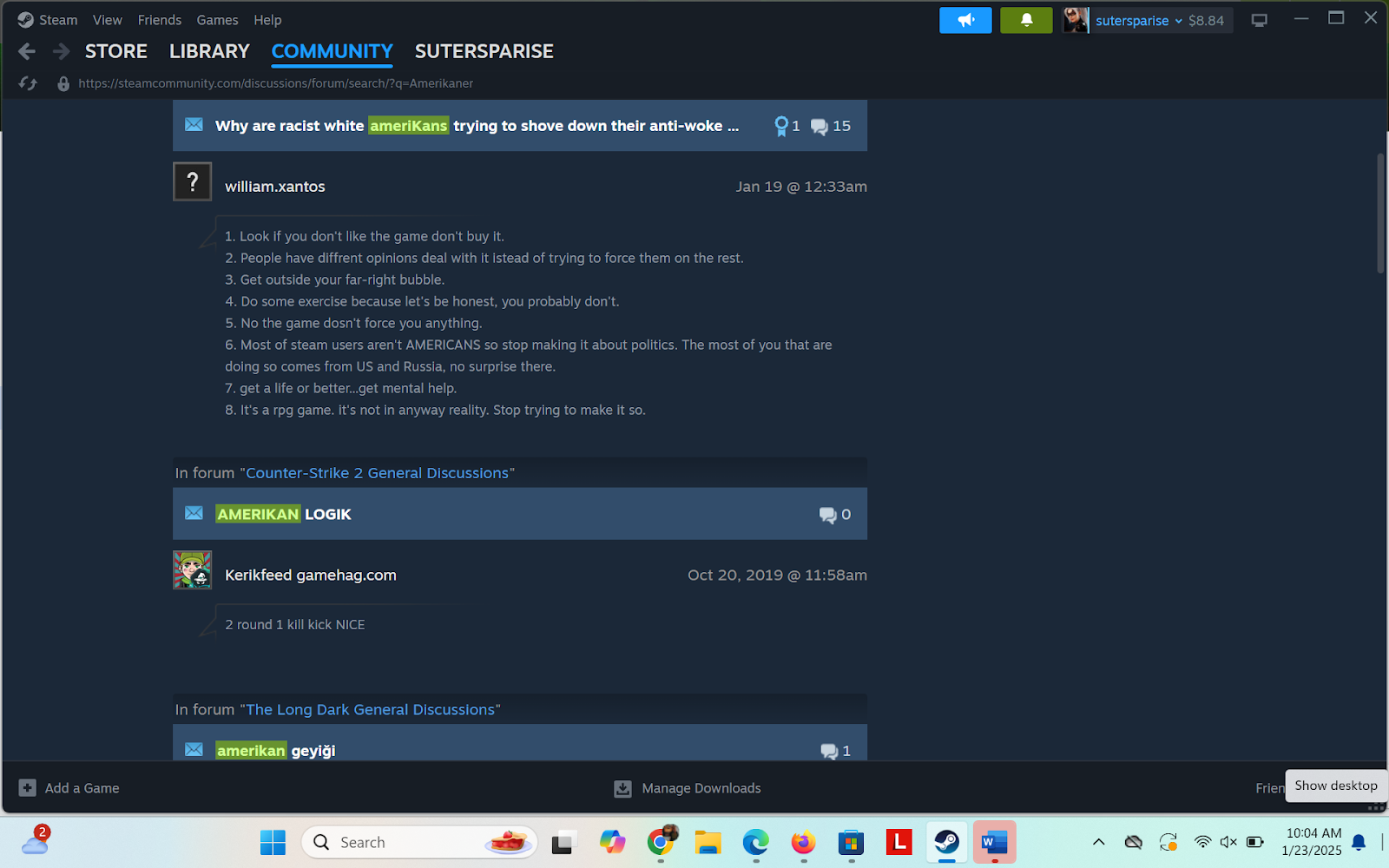
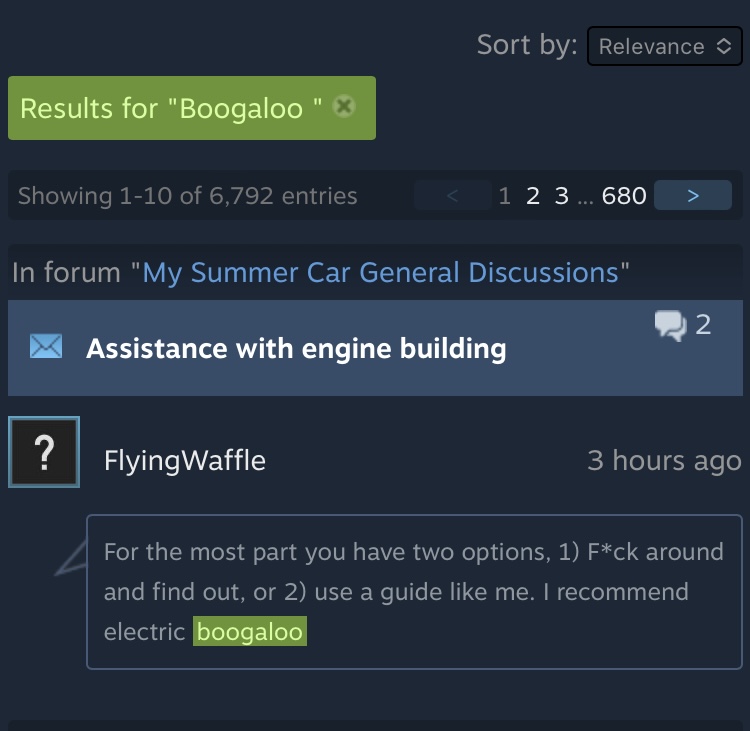
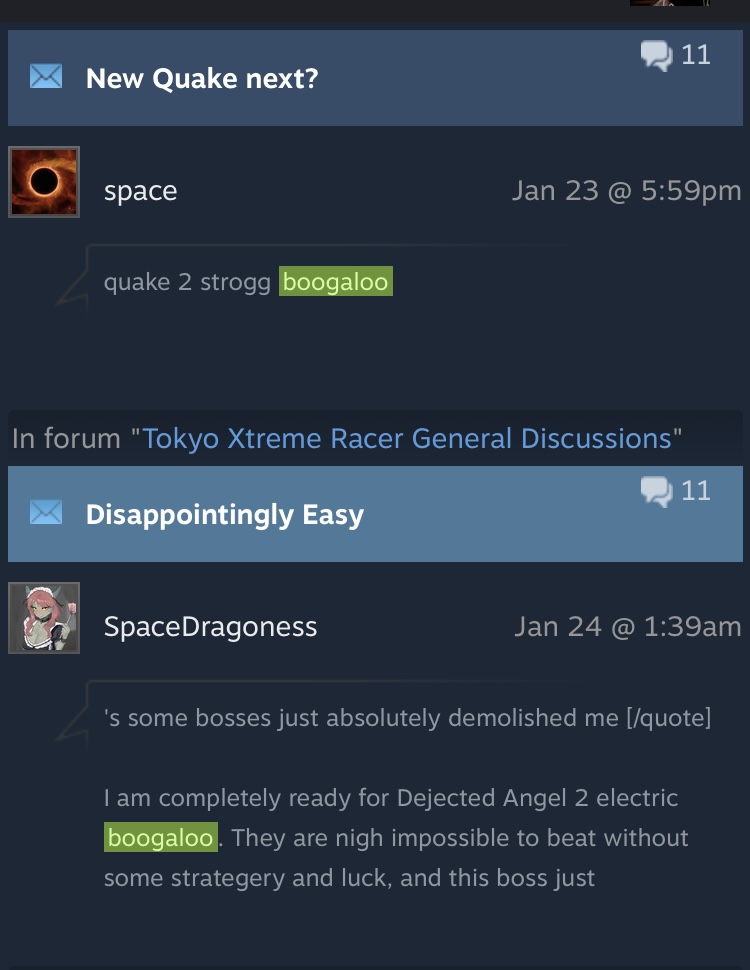
The ADL also went after copypastas—blocks of text copied and pasted to provoke reactions—identifying 1.83 million “potentially harmful” ones without bothering to check context. Their keyword-based approach flagged terms like “boogaloo” and “amerikaner” without acknowledging their multiple meanings. “Boogaloo” is mostly a Gen-Z meme, not a secret alt-right code word in gaming. “Boogalo” does have alt-right connotations, but there are other connotations like the one listed above. “Amerikaner” can refer to a cookie, the German word for “American,” or even a famous YouTuber’s username. They also flagged “Goyim” as a slur, despite it being a common and sometimes affectionate term used by Jewish people themselves. In the in-group of Jewish people it is often non-offensive. Though the term can be used in an offensive manner by antisemitic people, the ADL made no distinctions.
Curious, I did a Steam keyword search for “Amerikaner.” The first result was a left-winger calling out racism. The second was someone mocking Americans in Counter-Strike. The third was a non-English post. None of the results, in my opinion, rose to the level of extremism. I also searched “Boogaloo” and found references to the classic “electric boogaloo” meme, a non-English speaker using the term, and a gaming forum name. The ADL didn’t bother with this level of nuance—they just scraped forums, pulled words out of context, and called it a day.
The ADL also attacked Garry’s Mod (G-Mod), a sandbox game known for its anything-goes creativity. They focused on one mod featuring maps of real-life mass shootings, citing comments with words like “based,” “Sigma,” and even “Subscribe to PewDiePie” as signs of extremism. But these are common ‘chronically online’ phrases with broad uses. “Based” is Gen-Z slang used by individuals on both the left and right. “Sigma” is a meme mocking “alpha male” tropes. And while the Christchurch shooter did mention PewDiePie, claiming the ADL is unfairly targeting him isn’t exactly a stretch. Yes, PewDiePie has had controversies, but painting him as a hate symbol is a major leap.
The report wraps up with the tragic white supremacist attack in Turkey, where the ADL notes that while there were red flags on the shooter’s Steam profile, there’s “no evidence” he was directly inspired by extremist content on the platform. Still, they use this tragedy to argue Steam isn’t doing enough to moderate content. But even their own research found Steam actively filters Swastikas into hearts—identifying only 11 profiles where this workaround failed. Eleven profiles. Out of millions. That’s an edge case, not a crisis.
To be fair, the study did identify a small number of fringe groups glorifying hate and violence. But the bigger question is whether the ADL’s findings actually reflect a serious problem—or if they’re simply misunderstanding an edgy, chaotic, but largely non-extremist gaming culture. And given what a small amount of extreme content that the ADL found worldwide, it looks like Steam is actually doing its job.
The ADL’s Steam Comparison is Hypocritical and Misguided
Still, the ADL reportedly takes issue with Steam’s so-called “ad hoc” approach to content moderation, claiming that despite Valve’s removal efforts, the platform still “fails to systematically address the issue of extremism and hate.” But this critique ignores the reality of gaming culture and Steam’s own policies.
Steam’s moderation reflects the nature of its community. Its content rules fall into two categories: one for games—allowing all titles except those that are illegal or blatant trolling—and another for user-generated content, which bans unlawful activity, harassment, IP violations, and commercial exploitation. The ADL criticizes Steam for not taking a stricter stance like Microsoft and Roblox, but that comparison is misleading at best.
Microsoft’s gaming history isn’t exactly a beacon of virtue. Xbox 360 live chats were infamous for racist slurs, and Call of Duty’s lobbies remain a toxic free-for-all. Meanwhile, Minecraft—the game the ADL seems to hold in high regard—was created by someone with a history of antisemitic remarks, and Microsoft itself has faced accusations of workplace discrimination. Yet, the ADL doesn’t seem nearly as concerned about these issues.
As for Roblox, while it does enforce stricter content moderation, it’s far from an extremist-free utopia. The Australian Federal Police have warned about the platform’s potential for radicalization, and NBC has reported extremist content explicitly targeting children. If anything, this suggests that heavy-handed moderation doesn’t necessarily eliminate bad actors—it just pushes them to adapt.
Steam’s approach may not align with the ADL’s ideal vision of content moderation, but pretending that Microsoft and Roblox represent the gold standard ignores their own deep-seated issues. It does not make sense for a platform like Steam to have policies identical or similar to XBox and Roblox. Both of those are fully live-service platforms, whereas Steam is primarily a consumption platform for games as opposed to a platform where users are constantly interacting with one another in-game, online through the platform.This creates market differentiation. Platform’s policies are a reflection of the services that they offer and if users feel the policies are problematic they can jump ship to another provider.
Regulators Must Beware of Overreach from Non-Trust & Safety Experts Like the ADL
In its report, the ADL calls for a national gaming safety task force, urging policymakers to create a federally backed group to “combat this pervasive issue” through a multi-stakeholder approach. On paper, this sounds like a noble goal. In practice, it’s a recipe for government overreach that could stifle the gaming industry’s creative and independent spirit.
Gaming has thrived because of its grassroots nature—built by passionate developers and players, not by bureaucrats or advocacy groups with no real understanding of gaming culture, online community norms, or trust and safety. A federal task force risks imposing rigid, top-down regulations that don’t fit the dynamic and ever-evolving gaming world. Worse, it could open the door to politically motivated interventions that prioritize appearances over real solutions.
The ADL also suggests Steam engage in multi-stakeholder moderation efforts. But who controls the conversation? When powerful corporations and activist organizations dominate these discussions, smaller developers and gaming communities get sidelined. That’s how you end up with policies shaped by corporate interests and advocacy agendas rather than solutions that actually work for gamers. And let’s be blunt—the ADL has no business dictating content moderation policies for gaming platforms.
The ADL is not an expert on content moderation, online community dynamics, or trust and safety. It has no meaningful experience navigating the complexities of digital spaces, algorithmic content regulation, or the unique cultural norms that define gaming communities. Instead, their report relies on anecdotal evidence, an oversimplified AI model, and out-of-context symbols, all of which lead to flawed conclusions and misleading claims.
Steam isn’t Microsoft or Disney. It’s a privately owned company run by Valve and Gabe Newell, without the vast political and financial clout of industry giants. Forcing broad content moderation mandates onto platforms like Steam sets a dangerous precedent, burdening smaller businesses that lack the infrastructure of the major tech companies. And let’s be clear: Steam’s primary function is to sell video games, not to serve as a social media watchdog.
The ADL’s concerns about extremism may be well-intended, but their lack of expertise, misinterpretation of gaming culture, and one-size-fits-all approach make them uniquely unqualified to weigh in on this issue. Their push for federal intervention aligns with the broader SAFE TECH Act’s concerning political and financial motivations, which could disproportionately harm platforms that aren’t backed by corporate lobbying power.
Yes, online extremism is a problem—but handing control to out-of-touch regulators and advocacy groups that don’t understand the space isn’t the answer. The gaming industry must stay free, innovative, and independent—not bogged down by heavy-handed government oversight that threatens to erase the very culture that makes online gaming communities thrive.
Elizabeth Grossman is a first-year law student at the University of Akron School of Law in the Intellectual Property program and with a goal of working in tech policy.
Valve’s Steam PC gaming storefront appears to be on a bit of a pro-consumer kick as of late and I like it. We recently discussed the platform’s update to its purchase process, which now specifically includes explicit language around how the purchase is that of a revokable license to play the game, rather than any misleading or buried language that would lead a consumer to think they were actually buying the game outright. This doesn’t solve the problem of non-ownership of digital goods itself, of course, but it at least is a step in the direction of better informing the customer as to what they are getting in exchange for their dollars.
And now Steam appears to be tackling consumer protections surrounding the pre-ordering of DLC or “season pass” purchase tiers. The topline summary is the requirement of a release timeline and the potential for unilateral refunds if promises and timelines aren’t kept are being added to anyone looking to offer DLC for pre-order and/or putting a game up on a season pass offering.
Steam will now require more transparency around season pass and DLC content, including details about what’s included and expected release dates. Anything that ends up delayed could then potentially be eligible for a partial refund. “By offering a Season Pass, you are promising future content,” the new guidelines to development partners read. “In the process of launching a Season Pass you will be asked to commit to a launch timing for each content release in the Season Pass. That launch timing is a commitment to both customers and Steam.”
Steam adds that while game development is complex and challenging, with delays sometimes necessary and understandable, companies will only get to reschedule DLC and season pass release timing once. “If you aren’t ready to clearly communicate about the content included in each DLC AND when each DLC will be ready for launch, you shouldn’t offer a Season Pass on Steam,” the company writes.
There are some other requirements in there as well, but the above is where the real meat of this resides.
So, a couple of thoughts on this. First, it’s very difficult to argue against these changes if you look at it even for a moment from a consumer perspective. If I’m going to hand my money over to a game publisher for content to be published in the future (something I would never do, by the by), then I should at least be informed as to when to expect that content and be reimbursed if those promises aren’t kept. The fact that an additional provision in the policy change requires real money to be refunded in those instances, instead of in-game currency or other in-game givebacks, certainly helps as well. Digital product or not, this is fairly basic commerce standards we’re talking about here.
But I also rather like one specific manner in which Steam and Valve are framing this: “a commitment to both customers and Steam.” For far too long, the public has rightly felt that Valve’s storefront was far more friendly to game publishers than its own customers. Statements like this seem to indicate that Steam is looking to shift the pendulum on that, aligning more with the customer compared with the publisher.
Hopefully this trend will continue and Steam, and other storefronts too, will demonstrate that they value the patronage of their customers, rather than behaving as though that patronage is simply owed to them.
We’ve been writing stories about how, when it comes to digital purchases, we typically do not own what we’ve bought. Instead of buying a product, such as the digital version of a video game, what we are instead buying is a non-transferable license to use that product. While readers here will be largely familiar with this annoying concept, most online retailers bury the language for this so deep inside their labyrinthian EULAs that the overwhelming majority of the public is none the wiser. Steam has traditionally been no different, which is how you get confused fans complaining about how a game they bought has been changed via an update, or how your Steam library just disappears when you shove off this mortal coil.
But thanks to a California law that goes into effect next year, this has already changed. Ahead of that law, Steam has updated the messaging users see when purchasing a game to put the lack of game-ownership right in their faces.
Now Valve, seemingly working to comply with a new California law targeting “false advertising” of “digital goods,” has added language to its checkout page to confirm that thinking. “A purchase of a digital product grants a license for the product on Steam,” the Steam cart now tells its customers, with a link to the Steam Subscriber Agreement further below.
California’s AB2426 law, signed by Gov. Gavin Newsom Sept. 26, excludes subscription-only services, free games, and digital goods that offer “permanent offline download to an external storage source to be used without a connection to the internet.” Otherwise, sellers of digital goods cannot use the terms “buy, purchase,” or related terms that would “confer an unrestricted ownership interest in the digital good.” And they must explain, conspicuously, in plain language, that “the digital good is a license” and link to terms and conditions.
Frankly, the idea that this had to be mandated by state law is silly. That law didn’t suddenly educate Valve and other online marketplaces for digital goods that there was a problem here. Surely Valve has fielded questions and/or complaints from consumers in the past who had thought they’d bought a game only to find out they hadn’t. These companies could have proactively decided that informing their customers of the reality in a way that doesn’t take a set of bifocals and a law degree to parse through a EULA or ToS was a good idea. They just didn’t want to, for reasons that I’m sure you can decipher for yourself.
But now consumers will be better informed. And what will be interesting will be to see if this changes anything when it comes to the macro-behavior of customers.
In other words, if there isn’t some precipitous drop in purchases now that this new language is in place, the open and remaining question will be why Valve and companies like it weren’t more upfront about this reality all along?
The capricious nature of Nintendo’s IP enforcement practices are, if you’re a regular reader here, quite legendary. In this case, however, it seems like Nintendo’s reputation is what played a part in some copyright fuckery, rather than the company engaging in said fuckery itself.
If you’re not familiar with Garry’s Mod, then you obviously weren’t much of a gamer in the mid-2000s. Built off of Valve’s Source engine, the “game” is essentially a sandbox game with all of the physics of the engine, but in an open “world” in which players can more or less do whatever they want. It also allows for all kinds of user-created mods and content to be added. And, because Nintendo was and remains quite popular with a sizable segment of the gaming population, some of that user generated content created over the past roughly two decades included content and characters from Nintendo games.
The past tense in that sentence being important here, given that it was only recently that Kotaku reported that Nintendo demanded and got all of that content yanked down from the game entirely.
In an update to Garry’s Mod’s Steam page, the developers stated, “Some of you may have noticed that certain Nintendo related workshop items have recently been taken down. This is not a mistake, the takedowns came from Nintendo.”
The update continues, “Honestly, this is fair enough. This is Nintendo’s content and what they allow and don’t allow is up to them. They don’t want you playing with that stuff in Garry’s Mod – that’s their decision, we have to respect that and take down as much as we can.”
So why would Nintendo do this now, after years and years of the content in question existing? It obviously cannot be that Nintendo is suffering some form of irreparable harm due to its own fans having fun creating Nintendo-y things within Garry’s Mod. Were that the case, surely all that harm would have come to Nintendo’s attention somewhere over the course of the last eighteen-plus years. But for all that time, Nintendo was silent.
And, it appears, Nintendo has remained silent. Truth be told, there existed a version of this post taking Nintendo to task for being a bunch of nonsensical copyright assbags. That post has since been rewritten into this one, however, after we noticed some interesting contributions from our awesome community on our BestNetTech Insider Discord channel.
Brewster T. Koopa was one of the modders who had content removed from Garry’s Mod. They were adamant from the jump that it was unlikely Nintendo was actually behind the takedowns, based mostly on the above timeline. Then came the answer, with a screenshot from another person explaining just what happened.
We’ve seen this sort of thing before. And, frankly, the story here is the same as it was in that previous case with Bungie. The reason these bad actors are able to pull this sort of crap is due to two things. First, and least important, is Nintendo and Bungie’s reputations for being absolutely draconian when it comes to copyright enforcement. That’s something fairly close to victim blaming in this instance, to be sure, but it’s hard to imagine someone being able to pull this off with a CD Projekt Red or a company with a reputation for being more lenient on copyright matters.
But the real culprit here is Valve’s DMCA review process. If some folks on the internet can figure out in fairly short order that these takedowns are coming from an email address and domain that are not actually owned by or associated with Nintendo, then someone on Valve’s end could have figured this out as well. Instead, the content just came down. And if we’re going to have a DMCA process that looks anything remotely like it does today, that’s a pretty damned big problem. Collateral damage when it comes to matters of speech are simply not acceptable.
So, Valve needs to do better. And, sure, it would be nice if Nintendo turned over a new leaf and was better on copyright matters generally, but the company in this case was also something of a victim here.
Over a year ago, we discussed an annoying and strange set of actions taken by Rockstar and Take2, the companies behind the popular Grand Theft Auto series of games. Two actions were taken in sequence by those companies that were clearly related. First was that they worked to get a fan-made GTA 4 mod taken down, after learning that the mod essentially brought the cities and some of the gameplay from previous GTA games into GTA 4. Shortly after that was done, Rockstar released GTA Trilogy, which was a re-release bundle of those same older games the mod was incorporating. The problem is that GTA Trilogy was such a broken mess that the company had to pull the games out of online stores almost immediately. The launcher for the game was broken, the games were buggy as hell, and so on.
So why are we talking about this again? Well, GTA Trilogy is getting released again, on Steam first. But if you thought the bugs had been worked out and all is well with the title… LOL, no. Instead, a buggy version is being released again as is, but this time on sale!
Today, after some leaks and rumors, Rockstar Games released Grand Theft Auto: The Trilogy – Definitive Edition on Steam. The good news: It’s on sale, meaning you can grab all three classic games for cheap. The bad news: It’s the same infamously messy remaster that hasn’t received a substantial update since nearly a year ago. As you might expect, folks ain’t too happy about the situation.
Rockstar ultimately had to apologize to the community because the remasters were so awful. Eventually, Rockstar and Grove Street Games did fix some of the problems players had cataloged online. But the last major update for the game was in February 2022. Since then, the remastered trilogy has remained in a fairly rough state. So it doesn’t seem like the best time to release it on a new platform and yet, here we are.
$30 for three games really should sound like a good deal. But the public fully knows how buggy these games are and it’s completely tone-deaf to release those buggy games with the only give-back being a discount on price. And if you want to speculate that Rockstar has some patch in the works to un-break the games, keep in mind that the trilogy has been off the market for over a year now. There was plenty of time to fix the title before re-releasing it. I also imagine that buyers would prefer to have a completely working game rather than a discount on a broken one.
While some hold out hope that Rockstar will still swoop in, patch these games up and fix all the visual bugs and other problems, that seems more unlikely after today. Instead, it seems this is as good as things are going to get. Not to mention that Rockstar has plans to release these games on the Epic Store later this month, too. It does seem as if the time to fix GTA III, Vice City, and San Andreas has run out and Rockstar is ready to move on. What a shame.
It’s not just a shame; I struggle to understand how this move makes any sense at all. Discount or no, the release of a buggy game is going to get Rockstar absolutely murdered in terms of customer responses to this whole situation. It’s making the mistake it made over a year ago all over again, but telling the public to be satisfied with a discount on the game.
As they say, when you’re in a hole, the first step is to stop digging.