We’ve written about Buc-ee’s a couple of times recently, given the famed convenience store chain of the south’s aspirations to become the Monster Energy of convenience stores when it comes to nonsense trademark bullying. Buc-ee’s has gone after all kinds of other companies, almost always for the crime of having a cartoon animal in their logos. The company appears to think that it somehow has the exclusive right to such imagery, which is obviously bullshit. Buc-ee’s also appears to not have any concept of parody and parody’s protected status.
But I suppose if anyone is going to fight back against this sort of trademark bullying, it might as well be an underwear company called Nut Huggers. Jarrad Hewett, ownder of Nut Huggers Apparel, said he received a threat letter from Buc-ee’s over his company’s logo.
Hewett said he received the letter weeks after having his most profitable month of sales on record. His company focuses on underwear and apparel, using a patent to redesign the inside of its underwear to accommodate more active people. Hewett said he came up with his logo, which features a cartoon squirrel holding two acorns.
“We went with kind of tongue-in-cheek humor,” said Hewett.
After sinking hundreds of thousands of dollars into his business and finally seeing it succeed, he said he was shocked to get the letter from Buc-ee’s.
Now, according to Hewett, Buc-ee’s made some very familiar claims that his company logo was trademark infringement for using a “cartoon character” with “buck teeth” and that the company must refrain from using such imagery as that, along with “cartoons, rodents, baseball hats, and the colors red, yellow, and brown. Hewett was also instructed to only use front-facing images.”
And that, dear friends, is complete and utter bullshit. Buc-ee’s has no standing to make those general demands. Its trademark affords it no monopoly on those generic types of images. And, to make it all the worse, even after Hewett wrote back agreeing to alter his logo to remove the specific colors Buc-ee’s objected to, Buc-ee’s refused to meet him half way and insisted he comply with every single demand it had made.
And, now, here are the logos in question.
Buc-ee’s:
And Nut Huggers Apparel:
Those are not similar. They’re not the same overall color scheme. They’re not the same animal. Both logos prominently feature the name of each business. They’re not in the same market categories in terms of products. And variations of the Nut Huggers logo aren’t really substantially closer to the Buc-ee’s logo.
And for those reasons, Hewett plans to fight.
“I think that it’s time that somebody stands up and says, this isn’t right. There’s no infringement here,” said Hewett. “You all don’t have the right to be doing this and take away people’s local livelihoods.”
I fear I may have no choice but to write much more about this in the future, if only because a trademark dispute between a nut-hugging squirrel and a beaver practically writes itself.
This year, when states began using an expanded Department of Homeland Security system to check their voter rolls for noncitizens, it was supposed to validate the Trump administration’s push to harness data from across federal agencies to expose illicit voting and stiffen immigration enforcement.
DHS had recently incorporated confidential data from the Social Security Administration on hundreds of millions of additional people into the tool, known as the Systematic Alien Verification for Entitlements, or SAVE, system. The added information allowed the system to perform bulk searches using Social Security numbers for the first time.
The initial results, however, didn’t exactly back up President Donald Trump’s contention that noncitizen voting is widespread. Texas identified 2,724 “potential noncitizens” on its rolls, about 0.015% of the state’s 18 million registered voters. Louisiana found 390 among 2.8 million registered voters, a rate of about 0.014%.
Instead, experts say, the sweeping data-sharing agreement authorizing DHS to merge Social Security data into SAVE could threaten Americans’ privacy and lead to errors that disenfranchise legitimate voters.
The details of the agreement, which haven’t previously been reported, show it contains alarmingly few guardrails to ensure accuracy and scant specifics on how the data will be kept secure, election and privacy lawyers who have reviewed it say. Further, it explicitly does not bar DHS from deploying the SSA data for other purposes, including immigration enforcement.
Until this year, SAVE contained information only on immigrants who’d had contact with DHS, such as those with permanent resident status, and had been assigned immigrant identification numbers. State and local officials typically used the system to verify immigrants’ status when they applied for benefits such as SNAP or to check, one by one, whether individuals who were registering to vote were citizens.
Under the May 15 data-sharing agreement, which was posted recently on the Social Security Administration’s website, the system added information, including full Social Security numbers, on millions of Americans not in DHS databases. The combined dataset joins together this information with addresses, birth dates and criminal records, along with immigration histories.
The agreement allows the SSA’s data to be used for searches to check voters’ citizenship, along with “other authorized inquiries from Federal, State, territorial, tribal and local government agencies seeking to verify or ascertain the citizenship or immigration status of individuals within their jurisdiction.”
In doing these searches, SAVE stores not only the voter data that election officials upload but also the outcome of their queries, according to the data-sharing agreement and other documents from U.S. Citizenship and Immigration Services, the branch of DHS that oversees SAVE. The documents do not explain who can access this information or how it can be used.
Experts say adding Social Security data to SAVE could help election officials verify, en masse, if voters are U.S. citizens, but it shouldn’t be used to make final determinations that people aren’t citizens.
That’s because multiple audits and analyses have shown that SSA’s citizenship information is often outdated or incomplete, especially for people who became naturalized citizens. With the 2026 midterms about a year away, Caren Short, director of legal and research for the League of Women Voters of the United States, said she fears the expanded use of SAVE will lead to errors.
“The Trump administration is hunting people to try to purge people from the rolls who are lawfully registered, and they are doing it by looking at unreliable, outdated data,” Short said.
Several privacy lawyers said they believe it’s illegal for DHS to expand the use of SAVE without taking steps required in federal law, such as issuing a system of records notice to inform the public how the additional data will be collected, stored and used. Last month, advocacy groups sued the federal government, alleging that its expansion of SAVE and other data consolidation efforts violate the Privacy Act, a federal law that prohibits public agencies from misusing private information.
Officials at U.S. Citizenship and Immigration Services declined to answer questions from ProPublica.
In a filing responding to the advocacy groups’ lawsuit, federal officials said that another statute, the Illegal Immigration Reform and Immigrant Responsibility Act of 1996, explicitly allows information sharing to verify citizenship status and that agencies would exercise caution in determining whether voters are noncitizens.
“There is zero basis to assume that State officials have any interest in haphazardly and unlawfully removing large numbers of U.S. citizens from their voter rolls, and no credible evidence that any such thing has happened or is going to happen any time soon” the filing says.
Still, Leland Dudek, acting SSA commissioner until early May, told ProPublica he doesn’t trust that DHS will accurately flag noncitizens as officials try to cross-match data and files from multiple systems.
“They are probably going to make some massive mistakes,” he said.
This summer, the Justice Department started demanding access to state voter registration lists, saying this was necessary to ensure compliance with federal voter roll maintenance laws. The agency has filed lawsuits against a number of states that have refused to comply.
Some of the states that have refused to provide voters’ private information directly to the Justice Department have entered into agreements with DHS under which they upload that same information into the SAVE system.
According to a document obtained by the ACLU, which sued the administration for SAVE-related records, a growing number of states are signing agreements with DHS to use SAVE to vet voter rolls. Ten states had signed such agreements coming into 2025; as of July, another 10 had signed on, the document shows.
As counsel for Protect Democracy, a nonprofit voting rights group, Naomi Gilens specializes in issues related to privacy and technology. Gilens said it’s important for Americans to consider if they want the government — including future administrations, not just this one — to have so much consolidated information on them.
“That is a very invasive picture that starts to be painted, in one place, for every individual who lives here’s private lives,” she said.
As of last month, Homeland Security officials had run more than 33 million voters through SAVE, USCIS told NPR. So far, the agency has declined to say publicly what the outcome of these queries have been.
But the initial results are tucked into another document obtained by the ACLU.
As of late August, about 96.3% of the voters checked in the SAVE system were identified by the system as U.S. citizens. For an additional 3.1% of voters, the system either couldn’t find them or needed more information to determine their citizenship status. About 0.5% of voters checked had died, the system found. And 0.04% showed up as noncitizens.
According to copies of 12 state agreements with DHS obtained by the ACLU and reviewed by ProPublica, election officials are required to take additional steps to verify SAVE results for voters the system identifies as other than U.S. Citizens. Then, if SAVE still can’t verify citizenship, the election officials “must contact the registrant or registered voter to obtain proof of citizenship.”
Dudek and Kathleen Romig, a former Social Security official who now works at the Center on Budget and Policy Priorities, worry even those steps won’t be enough to prevent mismatches from happening.
People’s names can be misspelled or listed differently in the various datasets. Many states collect partial, not full, Social Security numbers from voters and matches using partial numbers will be even less accurate, since many people share the same names, Dudek and Romig said.
“If there’s Jane Smith that is a citizen, and a Jane Smith that isn’t, you don’t want to disenfranchise the citizen Jane Smith by accident,” Romig said.
Federal officials aren’t done adding data to SAVE. Next up, according to a recent USCIS presentation to election officials shared with ProPublica: passport information from the State Department. (The State Department referred ProPublica’s request for comment to DHS, which did not respond.)
A couple months ago we offered up the few remaining copies of our social media card game, One Billion Users, after fulfilling orders from our Kickstarter backers. Quite a few of you took the chance to snag one, and now we’re down to an extremely small number remaining: at time of writing, we only have ten undamaged copies of the game, and a few dozen of the damaged copies that we are offering at a deeper discount.
So if you haven’t gotten a copy yet, or you know someone who might want one, now’s your chance. And remember, gift-giving season is nearly upon us!
Also: there are still some of our original Kickstarter backers who haven’t completed their surveys, meaning we can’t yet send out their games. Don’t worry, we’re holding onto them and not selling them as part of this sale. If you’re reading this and you’re one of these backers, please complete your survey as soon as possible (if you’re having issues, there’s more information in this Kickstarter update).
The Trump administration has been ramping up its rhetoric against Venezuela since Day 1. Efforts to arrest up to 3,000 migrants a day focused on Venezuelans, many of whom had fled to the United States seeking a land with actual freedom.
Those who weren’t simply locked up in ICE’s many forever prisons were sent to places even worse than the autocratic government they had fled. Many Venezuelans were branded Tren de Aragua gang members by faulty databases, fired cops, and a collective of bigots willing to push Trump’s xenophobic agenda.
That meant many alleged gang members were sent off to be tortured by the corrupt El Salvadoran government while imprisoned in the country’s infamous CECOT. The few people who managed to fight back against the Trump regime were soon faced with options even less palatable than an indefinite stay in El Savador’s CECOT hellhole.
The Trump administration simply can’t find enough people to arrest to satisfy ghoulish racist/Trump advisor (but I repeat myself) Stephen Miller’s desire to eject one million brown people from this country by EOB 12/31/2025. Now, it’s decided it can bump those bigoted numbers up by simply murdering people in boats seen heading north from Venezuela.
The Trump administration has constantly engaged in war rhetoric to defend its actions. First, it claimed the mere existence of foreign gangs justified its mass deportation efforts. More recently, it’s claiming the mere existence of an international drug trade is all the justification it needs to engage in extrajudicial killings.
To date, the Trump administration — headed up by hard-drinking, OpSec-ignoring, leader-in-name-only Pete Hegeseth — has murdered the occupants of at least 17 boats in international waters. As has been the case almost always with Trump 2.0, the administration acted first and bodged together legal justifications later.
It’s unlikely these legal justifications will hold up in court — at least any court that isn’t 5/9ths wholly subservient to Donald Trump. But, for now, no court has stopped the administration from doing what it wants, which means it continues to kill people it openly admits it doesn’t have the evidence to bring criminal charges against. Instead, it continues to angrily tap the “King Trump” signs it has placed around the Oval Office, daring anyone in the government to try to rein in the Executive Branch.
The narrative is this: drug trade is roughly equal to terrorist attacks that justify violent military responses. Bringing drugs to purchasers and middle men is nothing more than an act of war. Therefore, killing people just because is nothing more than the US defending itself against an undeclared war perpetrated by… I guess… uncut fentanyl?
Unlike the Trump administration, the US press is actually putting people on the ground and talking to those directly affected by its new War on Boats. Venezuela isn’t a safe place to visit, much less leave. And yet, the Associated Press has managed to talk to people in that country who are now seeing people they know being straight up murdered to satisfy the GOP’s racist blood lust.
In dozens of interviews in villages on Venezuela’s breathtaking northeastern coast, from which some of the boats departed, residents and relatives said the dead men had indeed been running drugs but were not narco-terrorists or leaders of a cartel or gang.
Most of the nine men were crewing such craft for the first or second time, making at least $500 per trip, residents and relatives said. They were laborers, a fisherman, a motorcycle taxi driver. Two were low-level career criminals. One was a well-known local crime boss who contracted out his smuggling services to traffickers.
Now, most Trump fans will immediately point to this as evidence that the administration is right about the people it’s killing in international waters. But even the most charitable readings of administration statements will prove this wrong. Trump and Hegseth have continually portrayed the people they’ve killed as “narco-terrorists” with ties to the upper levels of international drug cartels. The reality — at least for a small portion of the people murdered by our government — is that these are people just trying to make a little bit of money to make their lives back in Venezuela a little less miserable.
The US government has killed at least 66 people this way. And that includes people who just happen to have operable boats at a time when that’s really all that’s needed to put your in the cross hairs of the next military drone strike.
One of the people killed in a boat strike was Robert Sanchez, who was just a fisherman trying to make a living and, hopefully, obtain a better boat to increase his success chances while out in open waters. But because he went fishing off the coat of Venezuela, he was determined eligible for death from above:
Sánchez had just finished offloading a day’s catch last month when he told his mother he would be taking a short trip and would see her in a couple of days. They had no idea where he was going.
After seeing clips on social media that mentioned his death, relatives broke the news to his mother, but not until after ensuring she had taken her blood pressure medication. Sánchez’s youngest son, a third grader, could not accept for days that his father was gone. He kept asking adults if his father could have survived the explosion, noting he might still be at sea.
No, the adults told the boy. His father was gone.
Even if we decide — for the sake of argument — that everyone killed by boat strikes was a person in a boat carrying drugs to another destination, that still doesn’t excuse the administration’s actions. Sure, there’s been a “War on Drugs” ever since Richard Nixon deputized a drug-addled Elvis Presley, but that war has always been carried out using the USA’s accepted rules of engagement. While due process might be a bit of joke — what with the reliance on plea bargains and sting operations that are pretty much just entrapment — it was at least considered something worthy of lip service, if nothing else.
Now, it’s just the US government sinking boats and killing people and pretending this is all OK because… well… the Trump administration says it’s OK. But if you’re OK with this, you’re pretty much going to be OK with any expansion of extrajudicial killings of alleged drug traffickers. If there’s no significant push back, the administration will move these efforts inland, much like it has with its “border security” actions. CBP and Border Patrol officers are now wandering the streets of cities far removed from this nation’s southern border. It’s only a matter of time before this administration decides that the quasi-legal stuff it does in non-US territory is what needs to happen on US city streets.
At that point, your belated objections will mean nothing. The time to protest is now. Waiting until you have to step over the bodies of your fellow US residents to express your displeasure with this administration will be far too little and far too late.
A key theme of Walled Culture the book (free digital versions available) is that copyright, born in an analogue age of scarcity, works poorly in today’s digital world of abundance. One manifestation of that is how lawmakers struggle to adapt the existing copyright rules to deal with novel technological developments, like the new generation of AI technologies. The EU’s AI Act marks a major step in regulating artificial intelligence, but it touches on copyright only briefly, leaving many copyright-related questions still open. The process of aligning national copyright laws with the AI Act provides an opportunity for EU Member States to flesh out some of the details, and that is what Italy has done with its new “Disposizioni e deleghe al Governo in materia di intelligenza artificiale.” (Provisions and delegations to the Government regarding artificial intelligence). The Communia blog explains the two main provisions. The first specifies that only works of human creativity are eligible for protection under Italian copyright law:
It codifies a crucial principle: while AI can be a tool in the creative process, copyright protection remains reserved for human-generated intellectual effort. This positions Italian law in alignment with the broader international trend, seen in the EU, U.S., and UK, of rejecting full legal authorship rights for non-human agents such as AI systems. In practice, this means that works solely generated by AI without significant human input will likely fall outside the scope of copyright protection.
The second provision deals with the legality of text and data mining (TDM) activities used in the training of AI models:
This provision essentially reaffirms that text and data mining (TDM) is permitted under certain conditions, namely where access to the source materials is lawful and the activity complies with the existing TDM exceptions under EU copyright law
The Italian AI law is about clarifying existing copyright law to deal with issues raised by AI. But some EU countries want to go much further in their response to generative AI, and bring in an entirely new kind of copyright. Both Denmark and the Netherlands are proposing to give people the copyright to their body, facial features, and voice. The move is intended as a response to the rising number of AI-generated deepfakes, where aspects such as someone’s face, body and voice are used without their permission, often for questionable purposes, and sometimes for criminal ones. There are good reasons for tackling deepfakes, as noted in an excellent commentary by P. Bernt Hugenholtz regarding the proposed Danish and Dutch laws:
Fake porn and other deepfake content is causing serious, and sometimes irreversible, harm to a person’s integrity and reputation. Fake audio or video content might deceive or mislead audiences and consumers, poison the public sphere, induce hatred, manipulate political discourse and undermine trust in science, journalism, and the public media. Like misinformation more generally, deepfakes pose a threat to our increasingly fragile democracies.
The problem is not that new laws are being brought in, but that the Danish and Dutch governments are proposing to use the wrong legal framework – copyright – to do so:
If concerns over privacy and reputation are the main reasons for regulating deepfakes, any new rules should be grounded in the law of privacy. If preserving trust in the media or safeguarding democracy are the dominant concerns, deepfakes ought to be addressed in media regulation or election laws. The Danish and Dutch bills address and alleviate none of these concerns.
It’s a classic example of copyright maximalism, where wider and stronger copyright laws are seen as the solution to everything. As well as being a poor fit for the problem, taking this approach would bring with it a real harm:
both deepfake bills conceive the new right to control deepfakes as a marketable, exploitable right, subject to monetization by way of licensing.
…
The message both bills convey is not that deepfakes are taboo, but that deepfakes amount to a new licensing opportunity.
In other words, the copyright maximalist approach makes everything about money, not morals. Ironically, taking such an approach would weaken copyright itself, as Communia’s submission to the Danish consultation on the deepfake proposal explains:
the proposal risks undermining the coherence of copyright law itself by introducing doctrinal inconsistencies. Copyright protects original expressive works, not a person’s indicia of personal identity, such as their image, voice or other physical characteristics. It is awarded for a limited duration in order to incentivise the creation of new works, and the existing corpus of limitations and exceptions has been designed with this premise in mind. Extending copyright to subject matter of an entirely different nature, for which marketisation is not an intended objective, will inevitably create legal uncertainty.
Communia points out a further reason not to take the copyright route for protecting people against deepfakes. The Danish bill would grant performing artists a new and wide-ranging copyright in their performances that would have a negative impact on the public domain:
the proposed extension of protection to subject matter that does not constitute a performance of an artistic or literary work raises significant concerns as to scope and proportionality. The introduction of a new exclusive right with such a wide scope would unduly restrict the Public Domain, interfering with the lawful access and reuse of subject matter that is currently out-of-copyright and that should remain as such, in the absence of clear economic evidence that such expansion is needed.
Moreover, as Communia notes:
The recitals of the draft [Danish] bill themselves acknowledge that multiple legal bases for acting against deepfakes already exist, including within criminal law. If individuals face difficulties in asserting their rights under the current framework, the appropriate course of action would be for the legislator to clarify the existing legal position. Introducing an additional and conceptually flawed layer of protection risks creating confusion and may ultimately prove counterproductive.
There’s no doubt that the harms caused by AI-generated deepfakes need tackling. The situation is made worse by advanced AI apps explicitly designed to make deepfake generation as easy as possible, such as OpenAI’s Sora, which are currently entering the market. But introducing a new kind of copyright is the wrong way to do it.
Last year, we wrote about Donald Trump’s bullshit lawsuit against Iowa pollster Ann Selzer for releasing surprising polls right before the 2024 election suggesting that Kamala Harris might actually beat Donald Trump in Iowa. The polls turned out to be wrong—as polls sometimes are—and Trump decided this was grounds for a lawsuit. That case continues with a bunch of nonsense legal gamesmanship.
But Trump’s lawsuit wasn’t the only one. A separate “class action” lawsuit was filed against Selzer and the Des Moines Register by Dennis Donnelly, a random Des Moines Register subscriber who claimed the poll constituted “fraud,” “professional malpractice,” and—even more ridiculously—”interference with the right to vote.” It was basically a copycat lawsuit of Trump’s to try to put more pressure on Selzer and the Des Moines Register.
Polls, like nearly all speech, are protected by the First Amendment. To get past that rather large hurdle, a plaintiff would need to show the poll was somehow both false and made with “actual malice”—not that it was mean-spirited, but that Selzer basically knew it was “false” when she published it.
That’s a problem when the “expression” in question is a poll based on data Selzer actually collected. It’s an opinion derived from methodology, not a factual claim that can be “false.”
Finding actual malice requires Donnelly to plausibly allege Defendants sacrificed decades of work in cultivating this reputation for accuracy by “knowingly or recklessly” manufacturing a poll they knew was incorrect in pursuit of an unclear goal. See ECF No. 36 at 33. With no factual allegations to support such an assertion and mere conclusory statements, Donnelly asserts only a bare legal conclusion accompanied by actual malice buzzwords that Defendants acted knowingly or recklessly. This is insufficient to meet the plausibility standard….
The court’s response to the “fraudulent misrepresentation” claim is even more brutal:
No false representation was made. Defendants conducted a poll using a particular methodology which yielded results that later turned out to be different from the event the poll sought to measure. The results of an opinion poll are not an actionable false representation merely because the anticipated results differ from what eventually occurred…. Donnelly, and all other readers, knew how the poll was conducted because the poll results were accompanied by a thorough discussion of methodology…. Donnelly does not claim the disclosed methodology was not followed, that results were falsified, or that Defendants altered the poll in some other way which did not reflect the publicly disclosed methodology. Defendants told readers exactly what they did and how they did it. Therefore, no false representation was made.
The court then highlights the absurdity of Donnelly’s position by applying his own logic to the polls he cited favorably:
Donnelly cites to several other polls which had then-candidate Trump ahead by between seven and nine points…. The actual margin of the election was thirteen points…. Donnelly cites these other polls favorably, yet, by his definition of misrepresentation, every single one of these polls cited also “was all wrong.” … These polls were not fraudulently misrepresenting the state of the race, they merely used different methodologies in an attempt to best capture a snapshot of a dynamic race. … Donnelly fails to cite to any authority finding an opinion poll of a future event constitutes a false factual assertion.
The “professional malpractice” claim fares no better. The court compares it to suing a weather forecaster for an incorrect prediction and walks through the parade of absurdities that would follow:
Donnelly’s claim also fails because political opinion polls are predictive and inherently uncertain. Defendants here carried out a randomized survey and published the results along with a full explanation of the poll methodology. Donnelly’s novel attempt to impose liability for news prediction is similar to Brandt v. Weather Channel, Inc. in which a plaintiff sought to hold a news channel liable for an inaccurate weather forecast…. That court noted “to impose such a duty would be to chill the well established first amendment rights of the broadcasters.” Id. at 1346. The court in Brandt further observed the litany of absurd suits which could follow from imposing such a duty, such as construction workers suing when they pour concrete in reliance on a weather report forecasting no rain or commuters suing when they are stuck in traffic and late to work because the news reported there would be light traffic. Id. Finding for Donnelly here would permit similar absurdity. The Court declines to permit such absurdity and finds Defendants owed no such duty to Donnelly.
This ruling doesn’t just dismiss Donnelly’s lawsuit—it preemptively demolishes every argument Trump is using in his own case. As Jacob Sullum at Reason points out, Trump’s lawsuit is even weaker than Donnelly’s already pathetically weak case:
If anything, Trump’s fraud claims are even less plausible than Donnelly’s. Donnelly, who sued on behalf of all Des Moines Register subscribers, actually has a commercial relationship with the newspaper. Trump, by contrast, does not seem to have any such connection with the Register or Selzer. But both lawsuits suffer from the same basic problem: Because they treat misleading journalism as actionable fraud, they amount to thinly veiled assaults on freedom of the press.
Of course, these lawsuits were never really about having plausible claims. These lawsuits exist to send a message: publish anything that favors a political opponent of Donald Trump, and he and his MAGA allies will bury you in litigation. It doesn’t matter if the cases are frivolous. The process is the punishment, and the threat of more lawsuits is the deterrent. That’s not a legal strategy—it’s a censorship campaign dressed up in legal paperwork.
The Complete IT Exams Training Bundle covers five platforms — Cisco, AWS, CompTIA, Microsoft, Google, and Linux — with expert-led courses, labs, and exam prep. The bundle comes with access to multiple exam preparation platforms including LinuxPath, DojoLab, CodeDirect, and ExamsDigest. You’ll be able to train for CompTIA Security+, AWS Solutions Architect, Cisco CCNA, Linux+, and others (exams and certification not provided in this bundle). It’s on sale for $39.97.
Note: The BestNetTech Deals Store is powered and curated by StackCommerce. A portion of all sales from BestNetTech Deals helps support BestNetTech. The products featured do not reflect endorsements by our editorial team.
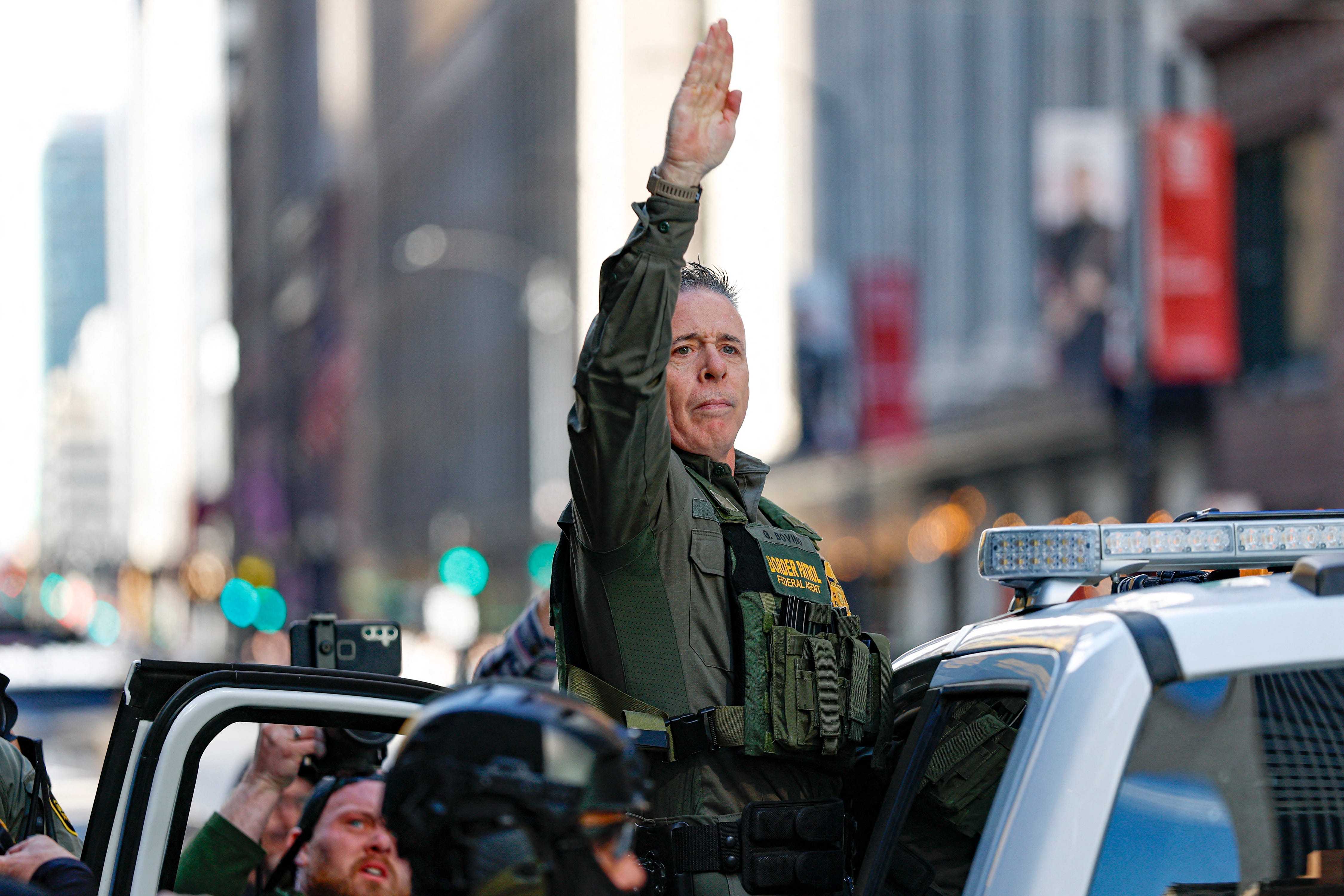
Gregory Bovino’s star will continue to rise. Admitting you lied to a court no longer matters when the entire administration does it on a daily basis. All that matters is that you serve the fascist cause. And the Border Patrol commander sent to handle things in Chicago certainly has the right look for the job.
Between the alt-right hairdo and the wave the looks a lot like a Nazi salute, the guy who used to patrol the southern border in California is now the face of Trump’s federal invasion of Chicago, Illinois. The arrival of federal officers and federal troops has been greeted with protests, public statements, and lawsuits.
Bovino hasn’t actually been sued personally, but as the commander of the collective of bigots engaged in hunting down non-whites and removing them from the country, Bovino is definitely the source of the rights violations currently being litigated.
Bovino prides himself on answering to no one and perpetrating as much violence as possible against those who oppose him. He put his face out there willingly and seems to welcome as much press attention as possible, even as he continues to be the worst version of himself.
His actions have already gained the attention of a federal judge. The unprovoked violence engaged in by federal officers has already been hit with a federal injunction. And Bovino himself was one of the first to violate the court order, captured on camera tossing tear gas into a crowd of protesters despite not doing any of things he was supposed to do before throwing around crowd control munitions: issuing dispersal orders, giving people time to disperse, etc. When caught, he claimed someone had hit him in the head with a rock and suggested the presiding judge had no business telling him what to do since she herself hadn’t been hit in the head with a rock.
“Mr. Bovino and the Department of Homeland Security claimed that he had been hit by a rock in the head before throwing the tear gas, but video evidence disproves this. And he ultimately admitted he was not hit until after he threw the tear gas,” Ellis said Thursday.
The injunction granted by Judge Ellis on Thursday extends temporary restrictions that she issued last month. Judge Ellis ordered federal agents to wear body cameras, give at least two audible warnings before using riot control weapons, and to use those weapons only to “preserve life or prevent catastrophic outcomes.”
She said the restrictions were necessary because immigration agents in Chicago had pointed guns at civilians who were not presenting a physical threat, used pepper spray, deployed tear gas and shot pepper balls.
“I see little reason for the use of force that the federal agents are currently using,” Judge Ellis, who was nominated to the federal bench by President Barack Obama, said in a ruling from the bench. She added: “The use of force shocks the conscience.”
Her new order [PDF] says Bovino only part of larger problem — one that takes the form of pretty much every bully and bigot that currently serve as part of Trump’s mass deportation machine:
Plaintiffs have also presented evidence that makes clear that senior officials have encouraged and endorsed federal agents’ targeting of non-violent individuals exercising their First Amendment rights. For example, Defendant Noem has instructed federal agents to “go hard” and “hammer” individuals for “the way they are talking, speaking, who they’re affiliated with.” Defendant Bovino followed this up by informing federal agents that a “free speech zone” outside of the Broadview Detention Center is “now going to be a ‘free arrest zone.’” He later stated in an interview: “If someone strays into a pepper ball, then that’s on them. Don’t protest, and don’t trespass.” And during his deposition, he confirmed that he believed federal agents’ uses of force throughout Operation Midway Blitz were “more than exemplary.”
That much makes it clear the administration (in whatever form) will lie about the dangers it faces just so it can continue to amp up its own violence and violent rhetoric. You know who else does that? Bullying children, which is pretty much the entirety of the anti-migrant workforce, as Lisa Needham notes in her rundown of this year’s deportation efforts:
The federal government keeps painting a front-facing, meme-driven picture of ICE, one where they are impossibly tough and skilled, and they get to crack heads because it is so violent out there. But when they are forced to tell the truth in court, their injuries are comically minor, the kind of thing you wouldn’t even go home from work for.
So, which is it? Well, it really is both.
When DHS’s goons are a roving band of masked armed men, they’re tough as hell. And why not? They spend their days arresting schoolteachers and tear-gassing kids from a safe distance away. They’re pretty impervious to harm. That said, they also are little babies, because they don’t believe there should be any consequences for their actions, and even the smallest harm they suffer is an outrage, something they simply can’t comprehend.
And that’s completely expected. It’s an administration filled with some of the most childish people ever to hold high-level government positions. They’ve modeled themselves after Trump’s infantile belligerence and they’ve been rewarded handsomely for prostrating themselves in front of a man who is the embodiment of the phrase “lowest common denominator.” You’d never give a toddler the power to deprive people of their lives or freedoms. And yet, here we are, overrun by toddlers with lots of power and ambition but deliberately unwilling to grow up, even when there’s an entire nation at stake.
Under Trump 2.0, the company has not only seen the complete lobotomizing of agencies like the FCC thanks to revolving door regulators like Brendan Carr, but a Trump-stocked court that makes it genuinely impossible to hold big companies like AT&T accountable for literally anything (see the 5th Circuit’s recent decision to nullify a fine against AT&T for spying on its customers and selling their location data).
With federal regulatory oversight dead and most states too overwhelmed or feckless to fill the void, AT&T’s now taking aim at the last vestiges of any sort of functional oversight: flimsy “self regulation” groups like the BBB National Programs’ National Advertising Review Board (NARB) and its BBB National Programs’ National Advertising Division (NAD) enforcement arm.
NARB and NAD are supposed to act as a way for companies to resolve disputes about misleading advertisements in house to forestall the complaints migrating over to the FTC and FCC (which again, no longer function under Trump). The organization will often give adorable wrist slaps to telecom companies that engage in things like lying about their competitors or advertising misleading promos.
Some times the actions will result in companies pulling misleading ads, but it’s usually long after the ads have been airing for a while and have had their intended impact.
For example, AT&T was recently criticized by NARB for airing ads that falsely promised everybody a new iPhone, when the actual promotion (more than a year old at this point) had all sorts of limits. You know, the sort of thing that’s super common in a country too corrupt to have functional regulators:
“In reality, the offer was only for AT&T customers on certain plans, excluding customers with low-cost plans. “The panel recommended AT&T modify its advertising to avoid conveying the message that everyone is eligible for AT&T’s free cell phone offer, or to clearly and conspicuously disclose that subscribers to value plans are not eligible or otherwise make clear the extent of plan eligibility,” the NARB announcement said.”
Now to be clear, companies can basically ignore NARB and NAD without any real consequence. Because again, these organizations were was long-ago designed by companies for companies, to create the illusion that companies like AT&T, Verizon, and T-Mobile are capable of regulating themselves without serious federal or state government oversight (spoiler: they can’t).
“AT&T also slammed the NAD for failing to rein in T-Mobile’s deceptive ads. The group’s slow process let T-Mobile air deceptive advertisements without meaningful consequences, and the “NAD has repeatedly failed to refer continued violations to the FTC,” AT&T said.”
Again that’s… ironic, given that companies like AT&T specifically built NAD and NARB to give the illusion that federal oversight isn’t necessary. It’s basically the flimsiest veneer of functional oversight specifically built to pre-empt real government oversight, and even that’s a bridge too far for the fine folks at AT&T.